
Avoid 45–90 Day Delays in M-1 Visa Training for International Pilots

Yes, an M-1 visa covers vocational advanced pilot training, including type ratings, FAA license conversions, and Level D simulator certification, as long as the program is SEVP-certified and issues an I-20 for that specific course. Before anything else, confirm the school’s SEVP/I-20 eligibility, enroll in the TSA Flight Training Security Program, and submit FAA Form 8060-71 for foreign-license verification. Those three moves determine whether your training start date is realistic.
TL;DR:
- Only schools certified under FAA Part 141 or Part 142 and listed on SEVP’s I-17 can issue valid I-20s for M-1 pilot training programs.
- FAA foreign-license verification requires 45 to 90 days and must be completed before scheduling checkrides or practical assessments to avoid delays.
- Enrollment in TSA’s Flight Training Security Program is time-sensitive and must be completed before beginning simulator or type rating training.
- Practical training authorization is limited to one month for every four months of full-time study and cannot be processed until after program completion and SEVIS recommendation.
- Prioritize confirming program eligibility and paperwork while parallel-processing TSA and FAA steps to avoid costly delays and missed training opportunities.
Table of Contents
- Who Qualifies for M-1 Vocational Pilot Training?
- How Does the M-1 Application Process Work Step by Step?
- How Do You Choose a Flight School That Supports M-1 Status?
- What Documents Do You Need for M-1 Flight Training?
- What Level D Simulator Training Looks Like for International Pilots
- Editorial Perspective: What the M-1 Process Actually Rewards
- Ready to Confirm Your M-1 Eligibility?
- Where This Article’s Facts Come From
- Sources
- FAQ
Who Qualifies for M-1 Vocational Pilot Training?
The M-1 visa exists for vocational and nonacademic training, and advanced pilot certification fits that category cleanly when the coursework is a type rating, an FAA conversion from a foreign license, or a Level D simulator program tied to a specific curriculum. This article covers that scope only. It does not address ab-initio private or commercial pilot schools, which follow a different regulatory path and attract a different kind of applicant.
The school issuing your I-20 has to hold FAA Part 141 or Part 142 certification. SEVP will not authorize Form I-20 issuance for a program that only holds Part 61 status, because Part 61 training lacks the structured, hour-based curriculum SEVP requires for vocational student classification, according to SEVP’s own guidance on flight training providers. That distinction separates schools that can legally enroll international M-1 students from schools that cannot, regardless of how good their simulators are.
The visa’s limits catch a lot of pilots off guard:
- No employment is allowed while the program is active, in any capacity.
- Practical training only becomes available after the program ends, and it requires a school recommendation entered in SEVIS plus USCIS authorization through Form I-765.
- Practical training time is capped at one month for every four months of full-time study, up to a limited maximum total.
- You cannot change status to F-1 from inside the United States on an M-1. If your plans shift toward academic study, you need a different visa strategy from the start.
Maximum stay is generally tied to your program’s stated length plus any authorized practical training. Padding your timeline with vague enrollment dates creates problems later, not flexibility.
How Does the M-1 Application Process Work Step by Step?
Sequencing matters more with M-1 flight training than with almost any other visa category, because three separate federal agencies each have their own clock, and none of them run in parallel by default.
- Confirm your SEVP-certified I-20. Ask the school to show you the program listed on its Form I-17, not just a general acceptance letter. The I-20 has to name the specific vocational course, whether that’s an A320 type rating or an FAA conversion track.
- File the consular M-1 visa application. This means completing the DS-160 and scheduling your interview. Appointment wait times vary widely by consulate, so check current wait times for your specific post rather than assuming a global average.
- Enroll in TSA’s Flight Training Security Program (AFSP/FTSP) right away. Once you have program details, this is the single most time-sensitive step. TSA’s Flight Training Security Program requires biometrics, a passport upload, and a processing fee, and it applies before you can begin training for a type rating, an instrument rating, or a multi-engine rating, per TSA’s own announcement of the finalized program.
- Submit FAA Form 8060-71 through IACRA for foreign-license verification. This is the step that trips up the most pilots on a deadline. Do not schedule travel, checkrides, or FSDO appointments before you actually have the verification letter in hand.
- Schedule your FSDO or DPE appointment after FAA verification clears. Written tests can happen at a testing center, but practical checks require an in-person meeting with a Designated Pilot Examiner. There is no remote substitute for that step.
FAA foreign-license verification typically takes several weeks, and the resulting verification letter stays valid for a limited period, according to the FAA’s Airmen Certification Branch. That window is tight enough that pilots who wait until after their visa approval to start verification often lose a month or more of usable training time before they even touch a simulator.
How Do You Choose a Flight School That Supports M-1 Status?
Not every flight school advertising “international students welcome” can actually issue an I-20 for your program. The check takes fifteen minutes and can save you months.
Start with SEVP’s official school search and cross-reference it against the school’s Form I-17 program listings. The instructional site and the specific program both need to appear on that filing. If a school can’t show you where its program sits on the I-17, that’s not a paperwork oversight. It means SEVP has not authorized that program for M-1 issuance.
Ask for a Programs of Study, Flight School Worksheet. This document lists every instructional hour: ground school, simulator time, dual instruction, and supervised briefings. For Part 142 Level D programs, SEVP expects the worksheet to show supervised simulator hours that add up to a genuine full-time course of study, and the dates on that worksheet need to match your actual I-20 dates before you apply for a visa.
Confirm what the Designated School Official (DSO) will actually put on your I-20. It should name the vocational program explicitly, not a generic “flight training” label, with dates that match the worksheet you were shown.
A few questions separate a program that’s ready for international students from one that isn’t:
- Can you show me where this exact program appears on your I-17?
- Is this a Part 141 or Part 142 program, and does that match what I need?
- Will your team help coordinate my TSA AFSP enrollment?
- Do you have experience supporting FAA foreign-license verification timelines?
Pro Tip: Vague answers to any of those four questions are a bigger red flag than a school’s price or location. A program that can’t clearly explain its own SEVP paperwork will struggle to help you navigate TSA and FAA timelines later.
What Documents Do You Need for M-1 Flight Training?
Getting the paperwork sequence right saves weeks. Here’s the practical order most pilots follow, start to finish.
- Secure your SEVP-certified I-20 naming the specific vocational program.
- Complete the DS-160 for your M-1 visa application and schedule your consular interview.
- Enroll in TSA’s AFSP/FTSP portal as soon as you have your program details, since this step often becomes the bottleneck.
- Submit FAA Form 8060-71 through IACRA for foreign-license verification.
- If applicable, prepare Form I-765 for post-completion practical training authorization, understanding that it can’t be filed until after your program ends and your school enters a SEVIS recommendation.
Documents and evidence to have ready before you start:
- Valid passport with adequate remaining validity
- I-20 naming your specific program
- Proof of funds covering tuition and living expenses
- Flight records, logbook copies, and your current foreign pilot license
- Foreign medical certificate, plus contact information for a U.S. Aviation Medical Examiner in case your foreign medical can’t be verified
- Passport-style photos per consular requirements
- Evidence of English proficiency meeting the ICAO Level 4 standard referenced in FAA guidance on foreign pilot conversion
On timing: start your AFSP enrollment the moment you have program details, since biometric appointments can take real lead time to schedule depending on your location. Submit FAA Form 8060-71 as early as your I-20 and license documentation allow, because that 45 to 90 day window is the longest single delay in the entire process. Do not book travel, a checkride, or a DPE appointment until your verification letter is in hand and still within its six-month validity window.
What Level D Simulator Training Looks Like for International Pilots
Some training centers run Level D full-motion simulator programs for A320, B737, B757, and A330 type ratings, with instruction led by experienced airline captains rather than generalist instructors. That structure lines up well with what SEVP wants to see on a Program of Study worksheet: scheduled ground instruction, logged simulator and dual hours, and supervised briefings that together form a genuine full-time vocational course rather than a loose collection of sim sessions.
Before enrolling, ask your admissions contact to confirm three things directly:
- That your specific program appears on the school’s current I-17 filing
- What support the school provides for AFSP enrollment and FAA verification logistics
- A realistic estimated schedule tied to your actual program dates, not a generic timeline
Past graduates have reported quicker job readiness and smoother transitions into airline assessment processes, a useful benchmark when you’re weighing training investment against expected career payoff.
Editorial Perspective: What the M-1 Process Actually Rewards
Most guides treat the M-1 visa like a formality bolted onto flight training. It isn’t. The visa, the TSA vetting, and the FAA verification are three independent bureaucratic systems that happen to intersect around your training date, and the pilots who struggle are almost always the ones who treated them as one process instead of three.

The conventional advice, “get your visa, then sort out the rest,” has the sequence backwards. FAA verification alone can eat 45 to 90 days, and that clock doesn’t start until you submit Form 8060-71. Pilots who wait until their visa is approved to begin that step routinely lose a training slot they’d already paid for.
What the research actually supports is a parallel-track approach: confirm I-20 eligibility, then run TSA AFSP and FAA verification simultaneously while your visa interview is being scheduled. The pilots who ask hard questions about a school’s I-17 listing before enrolling, not after, are the ones who avoid the worst delays. Prioritize verification paperwork over sentiment about a particular simulator brand or a glossy brochure. The paperwork determines whether you train on schedule. The simulator just determines how well you fly once you get there.
— Jake
Ready to Confirm Your M-1 Eligibility?
If you’ve got a foreign license and a target type rating in mind, the fastest path forward isn’t more research. It’s a direct conversation with a school that can show you exactly where your program sits on its SEVP filing and walk you through AFSP timing before you commit to dates.
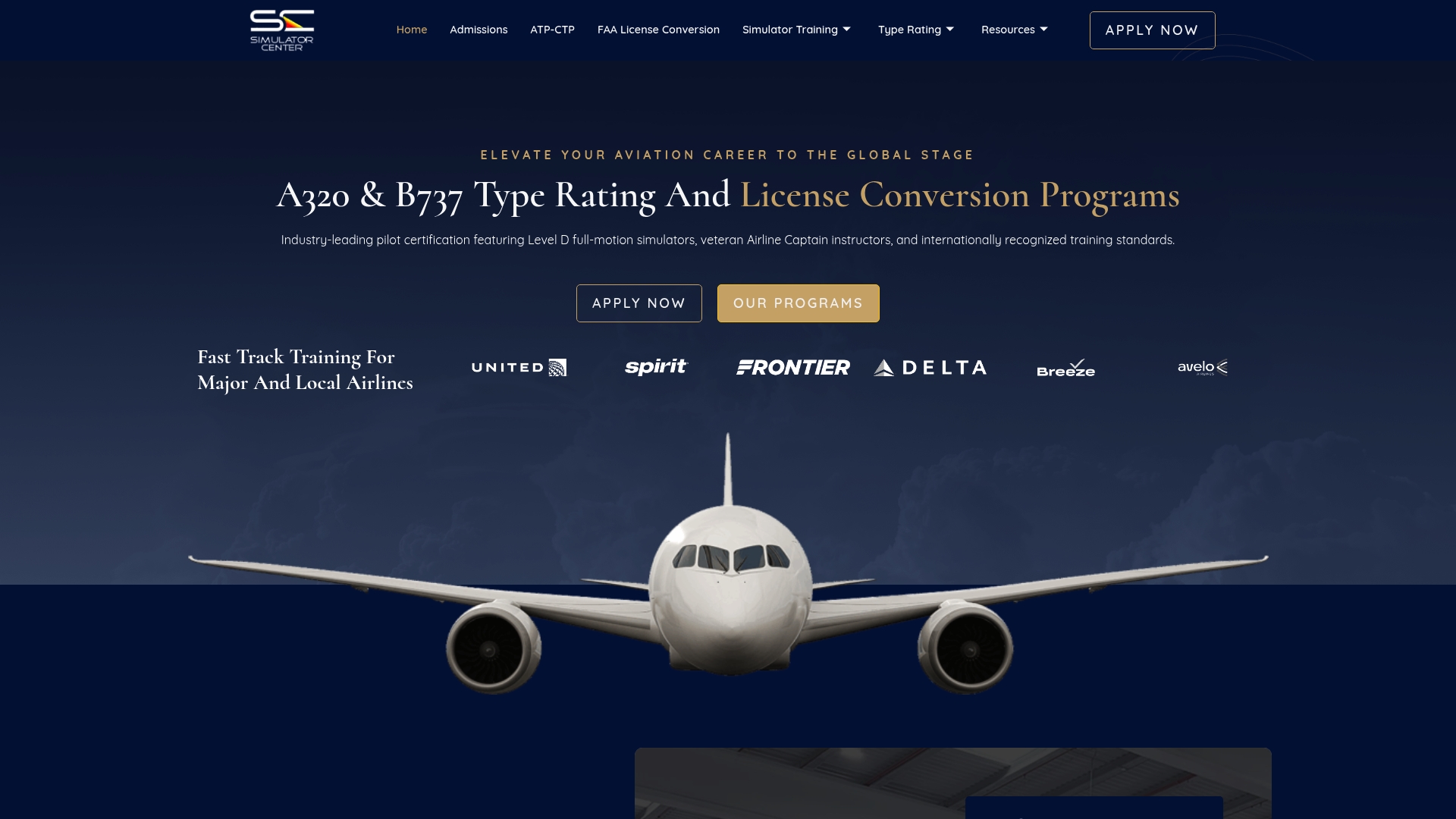
Some training providers offer SEVP-compatible vocational programs for A320, B737, A330, and B757 type ratings and FAA license conversion courses built specifically for pilots holding ICAO, EASA, or GCAA certificates. Programs are often structured around Level D simulator hours and instruction led by experienced captains, mapped to a Program of Study worksheet format SEVP expects to see. If you’re ready to move, contact admissions with your current license, medical status, and preferred training window. The team can confirm I-20 issuance for your specific program and walk you through AFSP coordination before you file a single visa form.
Where This Article’s Facts Come From
- FAA foreign-license verification process and timeline
- TSA Flight Training Security Program final rule
- SEVP guidance on M-1 flight program requirements
- Study in the States, DHS/SEVP student resources
Sources
- Verify the Authenticity of a Foreign License and Medical Certification | Federal Aviation Administration
- TSA announces publication of Flight Training Security Program final | Transportation Security Administration
- SEVP guidance: flight training providers and M-1 program of study requirements
- M-1 vocational student visa guide — Headman Law Group
FAQ
Can I Use an M-1 Visa for a Type Rating?
Yes, provided the school is SEVP-certified under Part 141 or Part 142 and issues an I-20 naming that specific type-rating program, not a generic training label.
How Long Does FAA Foreign-License Verification Take?
Typically 45 to 90 days, and the resulting verification letter is valid for about six months, so don’t book a checkride until it arrives.
Do I Need TSA Clearance Before Simulator Training?
Yes. Non-U.S. citizens must complete the TSA Flight Training Security Program, including biometrics and a fee, before starting training toward a type rating or instrument or multi-engine rating.
Can I Work While on an M-1 Student Visa?
No. Employment is prohibited during the program, and practical training only becomes available after completion, capped at one month for every four months of study up to six months.
What Happens if My Foreign Medical Certificate Can’t Be Verified?
You may need to complete a new medical exam with a U.S. Aviation Medical Examiner, since some foreign medical certificates cannot be verified through FAA channels.