
Home » Type Rating » B737-Classic
Earn your Boeing B737-Classic Type Rating through comprehensive ground school, full-motion simulator training, and airline-standard operational instruction. Our program is designed to prepare pilots for commercial jet operations with real-world proficiency.
Duration
28-35 Days
Training Hours
92-106 Hours
Table of Contents
Click Chapter To Travel
The B737-Classic Type Rating program is designed for pilots seeking an initial type qualification on the Boeing 737 Classic series (B737-300/400/500) through elite, airline-standard training. Combining in-depth ground instruction with full-motion simulator sessions, we ensure pilots develop technical mastery, procedural discipline, and operational confidence for modern airline flight decks.
Our curriculum follows globally recognized airline practices, preparing pilots for commercial opportunities across the US, European, and international markets.
What This Program Includes:
Final check ride preparation with specialized coaching
Training Outcome: Upon successful completion, pilots will have:
The B737-Classic Type Rating program accelerates your transition into airline operations with confidence. The curriculum emphasizes technical precision, procedural discipline, and multi-crew coordination (MCC), ensuring you are prepared for the operational standards of major carriers worldwide.

Train to handle the full spectrum of B737-Classic operations, including high-density normal operations and complex abnormal and emergency scenarios.

Global SOP & CRM Integration
Develop proficiency in Standard Operating Procedures (SOPs) and Crew Resource Management (CRM), ensuring compliance with multi-crew coordination standards expected by leading airlines.

Advanced Automation & FMS Logic
Gain expert-level understanding of the B737-Classic’s Flight Management System (FMS) and automation systems. Training focuses on mode awareness, energy management, and automation transitions across all flight phases.

Complex Operational Decision-Making
Experience realistic scenarios including system failures, adverse weather navigation, and time-critical decisions, building tactical skills required in high-pressure airline operations.
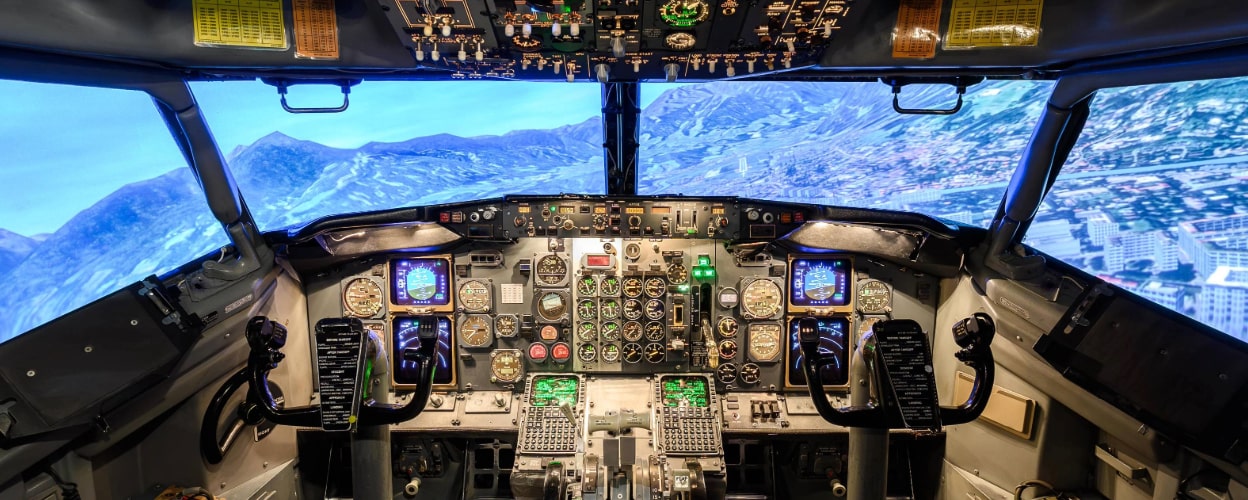
At Simulator Center, our B737-Classic Type Rating merges sophisticated simulation technology with rigorous instructional standards, ensuring pilots are fully operational in complex airline scenarios.
Total Program Duration:
28–35 days
Total Training Hours:
92–106 total hours
The program follows a structured airline-style training flow combining ground school, simulator training, and final check ride preparation. Each phase builds on the previous to ensure technical mastery, procedural accuracy, and operational confidence.

Duration: Approx. 60–70 hours
Format: Classroom instruction + Computer-Based Training (CBT)
Topics include:
Outcome: Complete theoretical understanding to confidently begin simulator training.

Aircraft: Boeing 737-Classic Full Flight Simulator (FFS)
Duration: Approx. 32–36 hours across multiple sessions
Focus areas:
Outcome: Hands-on airline-standard operational experience on the B737-Classic.

After completing simulator training, pilots proceed to final evaluation and qualification.
This phase includes:
Outcome: Successful completion results in earning the B737-Classic Type Rating and qualification for airline operations.

Most pilots complete the program within:
(Actual duration may vary based on experience and individual progress.)
Training Flow
Our B737-Classic Type Rating program follows a structured, airline-style training flow that progressively develops your technical knowledge, procedural accuracy, and operational confidence. Each stage builds on the previous to ensure pilots are fully prepared for real-world airline operations.
Focus: Foundational knowledge & procedural understanding
Outcome: Pilots enter simulator training with a strong theoretical foundation and confidence in operational procedures.
Focus: Practical application & operational proficiency
Outcome: Hands-on operational experience, procedural mastery, and confidence in handling complex airline scenarios.
Focus: Final evaluation & certification
Outcome: Successful completion awards the B737-Classic Type Rating, fully qualifying pilots for airline operations and multi-crew commercial roles.
To ensure every pilot is prepared for the rigorous B737-Classic Type Rating program, candidates must meet the following professional and regulatory criteria. These prerequisites guarantee a strong foundation for intensive ground school and Level D simulator training.
Valid Pilot License
Accepted authorities: DGCA, FAA, EASA, or other ICAO-recognized licenses
Purpose: Confirms the candidate has the legal and regulatory qualifications to undergo type rating training.
Flight Experience
Sufficient operational experience to qualify for B737-Classic Type Rating training
Purpose: Ensures pilots have practical flying experience to effectively apply simulator and procedural training.
Multi-Engine & Instrument Ratings
Valid Instrument Rating (IR)
Purpose: Confirms ability to operate complex multi-engine aircraft and fly under instrument flight rules (IFR)
English Language Proficiency
Minimum ICAO English Level 4 or higher
Purpose: Required for simulator training, Crew Resource Management (CRM), and airline-standard communications.
MCC & UPRT (If Applicable)
Note: These may be required or recommended depending on the regulatory authority or career pathway.
Purpose: Ensures pilots can effectively operate in multi-crew environments and handle unusual flight attitudes safely.