Home » Simulator Training » B737
Our B737 Simulator Training is designed for pilots who already hold a Boeing B737 type rating and want to maintain proficiency, enhance skills, or prepare for airline assessments in a highly realistic, airline-standard simulator environment.
Table of Contents
Click Chapter To Travel
This simulator-exclusive program provides flexible, airline-oriented B737 simulator sessions for professional pilots seeking proficiency, recurrent training, or high-stakes assessment preparation.
Unlike licensing or type conversion programs, this training focuses strictly on hands-on simulator mastery, allowing you to train on specific airline procedures, operational scenarios, and fleet-specific challenges at our Miami Springs Training Hub.
Ideal for:
Skill Validation: Precise manual handling, non-normal scenario practice, and decision-making.
Key Stats:
The Boeing 737 Simulator Training program is designed to help professional pilots maintain, refine, and master operational proficiency. Whether preparing for an airline evaluation or refreshing your skills, our sessions emphasize practical, high-fidelity skills that translate directly to Part 121 operations and international airline standards.

Train in complete airline profiles using a Level D environment. Practice high-density departures, complex arrivals, precision approaches, and critical system malfunctions, including emergency scenario management.

Automation, Manual Handling & SOP Discipline
Refine “Fly-By-Wire” (FBW) management and manual handling skills. Emphasis is placed on strict checklist adherence and SOP alignment with major US and international carriers.

Crew Resource Management & Decision-Making
Enhance your CRM skills with a focus on situational awareness, effective cockpit communication, and decision-making under high workload conditions.

Airline Assessments, Evaluations & Skill Refresh
Prepare for airline interviews (Spirit, United, Frontier, JetBlue), fleet transitions, or recurrent checks with expert instructor guidance.
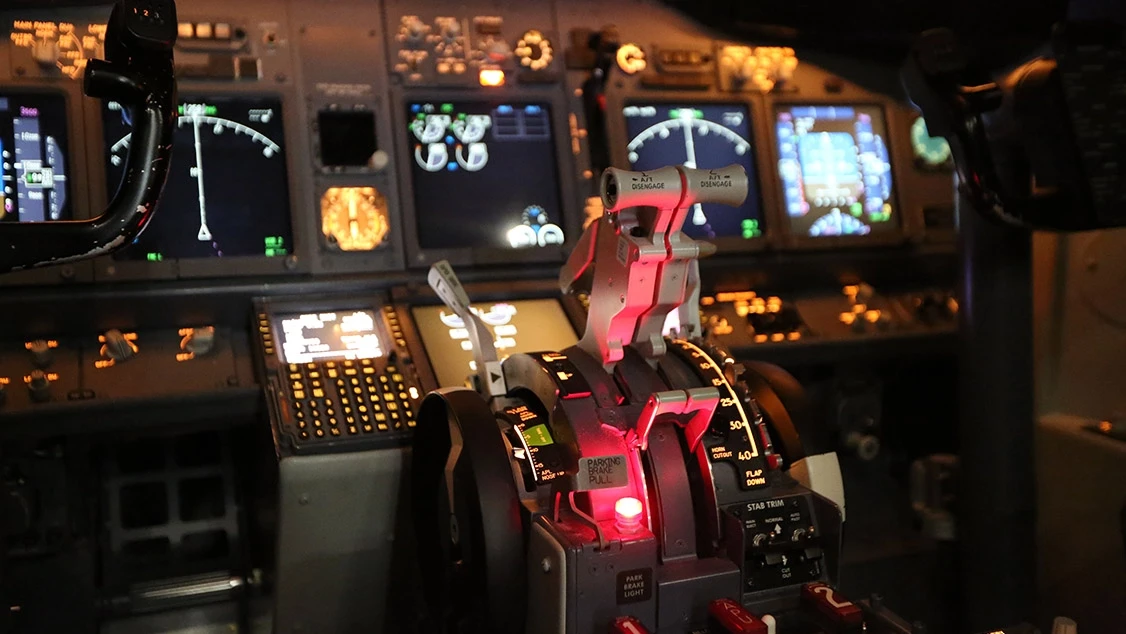
Simulator Center Training delivers structured, professional B737 training tailored to each pilot’s objectives while maintaining strict airline-standard discipline.

Our B737 training offers flexible scheduling to suit modern pilot needs:

Each session follows a proven airline-style structure to reinforce learning and performance:

No two pilots are the same, and neither are our sessions. Each training block is customized based on experience level and career goals:

A typical B737 simulator session may include:
Post-session debrief and feedback
Every session concludes with actionable recommendations to build confidence, refine skills, and ensure pilots are “check-ride ready.”
Training Flow
Our B737 simulator training follows a structured, airline-style process designed to maximize focus, efficiency, and measurable skill development. Every phase of the session is carefully planned to ensure pilots gain the most from their simulator time.
Each session begins with a comprehensive briefing led by your instructor. This includes:
Identification of focus areas tailored to your experience and career goals
By the end of the briefing, you’ll have a clear understanding of exactly what will be practiced and how success will be measured.
Train hands-on in a Level D Boeing 737 simulator using real-world operational scenarios. This phase focuses on:
Decision-making under high-workload and emergency situations
The simulator environment provides realistic motion cues and 4K visuals to replicate true-to-life airline operations.
After every session, instructors conduct a detailed, data-driven debrief to review your performance. This includes:
Personalized recommendations for improvement and actionable next steps
This structured feedback ensures each session contributes directly to skill advancement, confidence building, and airline readiness.
To ensure safe, effective, and airline-standard Boeing 737 simulator training, pilots must meet the following minimum requirements:
Valid Pilot License
A Commercial Pilot License (CPL) or Airline Transport Pilot License (ATPL) is required to participate in simulator training.
Multi-Engine & Instrument Ratings
Pilots must have active Multi-Engine (ME) and Instrument Ratings (IR) appropriate to their licensing authority to safely operate the simulator and practice full flight scenarios.
Medical Certification
A current Class 1 Medical Certificate issued by DGCA, FAA, EASA, or another ICAO-recognized authority is required to ensure medical fitness for advanced simulator operations.
English Language Proficiency
Minimum ICAO English Level 4 or higher is required for effective communication, Crew Resource Management (CRM), and adherence to airline-standard procedures during simulator training.