
Home » Simulator Training » B737-Classic
Our B737-Classic Simulator Training program is designed for pilots who already hold a Boeing B737-Classic type rating and want to enhance their skills, prepare for airline assessments, or complete recurrent and refresher training in a realistic airline-standard environment.
Table of Contents
Click Chapter To Travel
This simulator-focused program offers flexible, airline-oriented B737-Classic simulator sessions for professional pilots seeking proficiency, recurrency, or high-stakes assessment preparation.
Unlike licensing or type conversion courses, this program emphasizes hands-on simulator mastery, enabling pilots to practice specific operational scenarios, airline SOPs, and high-pressure procedures at our Miami Springs Training Hub.
Ideal for:
Skill Validation – Focused practice on manual handling, abnormal operations, and emergency procedures
Key Stats:
The B737-Classic Simulator Training program helps pilots maintain, refine, and master real-world operational proficiency. Whether prepping for a high-stakes airline evaluation or refreshing skills after a break, our sessions focus on high-fidelity simulator scenarios that translate directly to Part 121 and international operations.

Master airline profiles in a Level D full-motion simulator. Practice dense departures, complex arrivals, precision approaches. Train emergency handling and system failures

Automation, Manual Handling & SOP Discipline
Sharpen manual handling skills with Boeing’s analog-style autopilot and manual flight modes. Reinforce SOPs and checklist discipline aligned with US and international carriers

Crew Resource Management & Decision-Making
Develop elite CRM skills: effective communication, situational awareness, and cockpit coordination under pressure

Airline Assessments, Evaluations & Skill Refresh
Get “check-ride ready” for airline interviews (Spirit, United, JetBlue). Perfect for recurrent prep, fleet transitions, and confidence rebuilding
Simulator Center Training delivers B737-Classic training in realistic airline-style sessions meeting FAA/EASA standards. Each hour is designed to maximize skill progression, not just logbook entries.
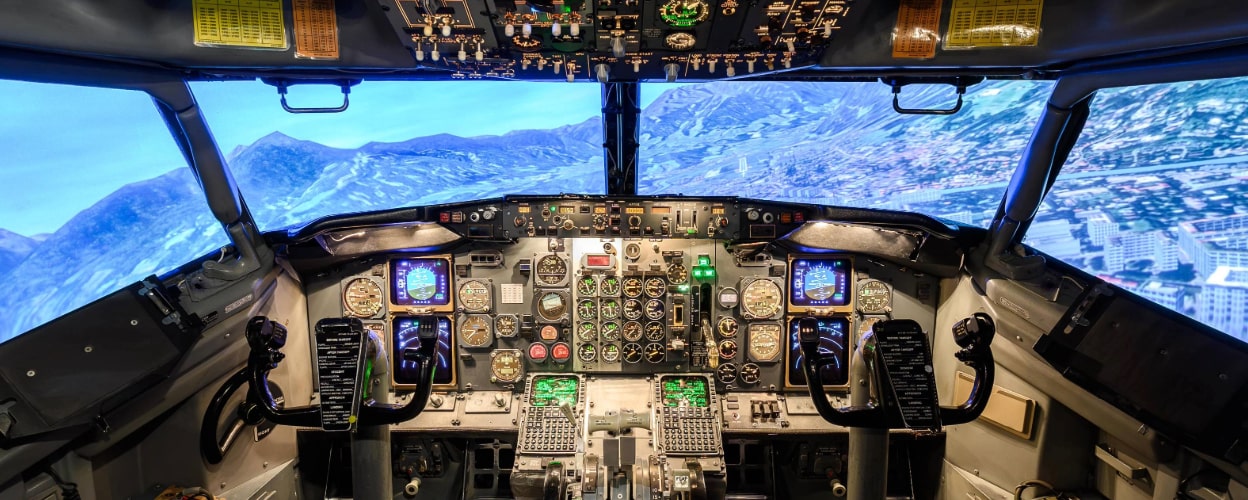
Our B737-Classic Simulator Training is delivered through structured, airline-standard sessions designed to meet each pilot’s individual objectives while maintaining strict operational discipline. Every session is purpose-driven, maximizing skill development, operational proficiency, and assessment readiness.

We offer flexible scheduling to fit modern pilot demands:

Our sessions follow a consistent airline-style process to ensure every moment in the simulator contributes to measurable improvement:

No two pilots train the same. Each session is customized to experience level, career goals, and airline requirements, emphasizing:

A typical B737-Classic simulator session may include:
Training Flow
Our B737-Classic Simulator Training follows a structured, airline-style flow designed to maximize efficiency, skill retention, and measurable improvement. Every session is carefully crafted to mirror real-world airline operations, ensuring pilots gain practical experience in a professional environment.
Each session begins with an instructor-led briefing where training objectives, standard operating procedures (SOPs), and specific scenario goals are clearly defined. Pilots gain a precise understanding of what will be practiced, expected performance standards, and areas of focus for skill development.
Pilots then enter the Level D full-motion B737-Classic simulator, engaging in hands-on exercises that replicate real-world airline operations. Sessions cover:
Crew Resource Management (CRM) and cockpit coordination
This immersive experience ensures that pilots not only practice flying the aircraft but also refine decision-making, communication, and teamwork skills essential for airline operations.
After the simulator session, pilots receive a comprehensive, data-driven debrief. Instructors review performance, highlight strengths, and identify areas for improvement. Actionable feedback ensures every session contributes directly to operational proficiency, confidence restoration, and airline assessment readiness.
To ensure safe, effective, and airline-standard training, all pilots must meet the following minimum requirements before enrolling in the B737-Classic Simulator Training program:
Valid Pilot License
A Commercial Pilot License (CPL) or Airline Transport Pilot License (ATPL) is required. This confirms the pilot has the necessary qualifications to conduct advanced simulator sessions safely.
Multi-Engine & Instrument Ratings
Pilots must maintain valid Multi-Engine (ME) and Instrument Rating (IR) privileges in line with their licensing authority, ensuring they are qualified to handle complex flight scenarios.
Medical Certification
A current Class 1 Medical Certificate issued by DGCA, FAA, EASA, or another ICAO authority is mandatory for participation. This confirms the pilot meets health and fitness standards for professional operations.
English Language Proficiency
Pilots must demonstrate minimum ICAO Level 4 English proficiency, essential for simulator training, Crew Resource Management (CRM), and adherence to airline-standard communication protocols.