
ATP CTP Syllabus: 30 Academic, 10 Simulator Hours Pilots Must Verify
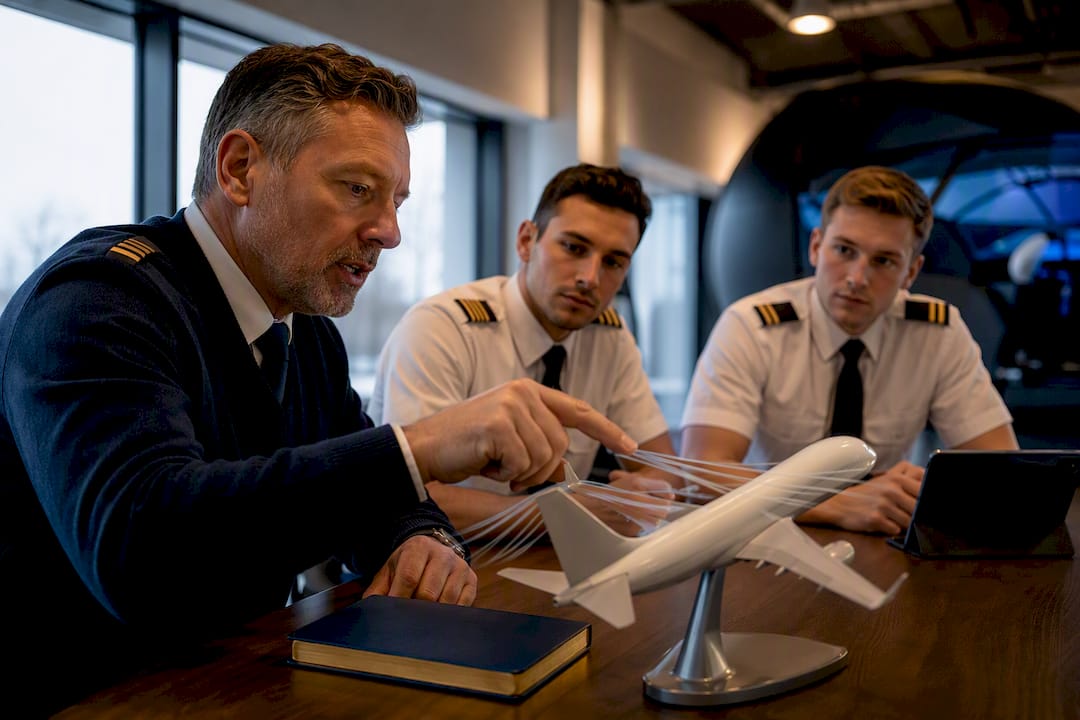
The ATP CTP syllabus splits into two required parts: roughly 30 hours of academic instruction across four stages, plus 10 hours in an approved flight simulation training device. Academics run through high altitude aerodynamics, meteorology, air carrier operations, and crew resource management. The simulator portion drills stall and upset recovery, automation management, and adverse weather operations on Level 4 FTD or Level C/D full-motion equipment. You need a 70% minimum score to pass, and the graduation certificate that follows is a hard prerequisite for the ATP knowledge test.
TL;DR:
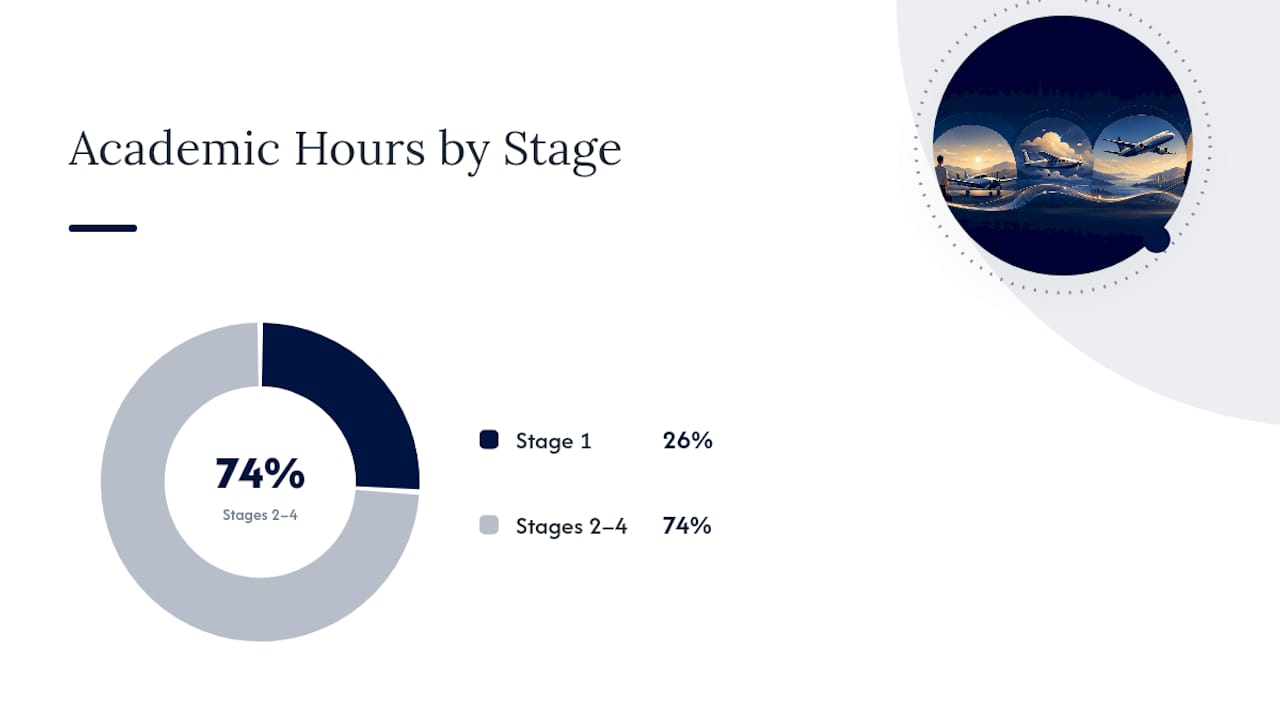
- Completing the academic portion typically requires around 31 hours divided into four stages, with exams after each, ensuring mastery before simulator training begins.
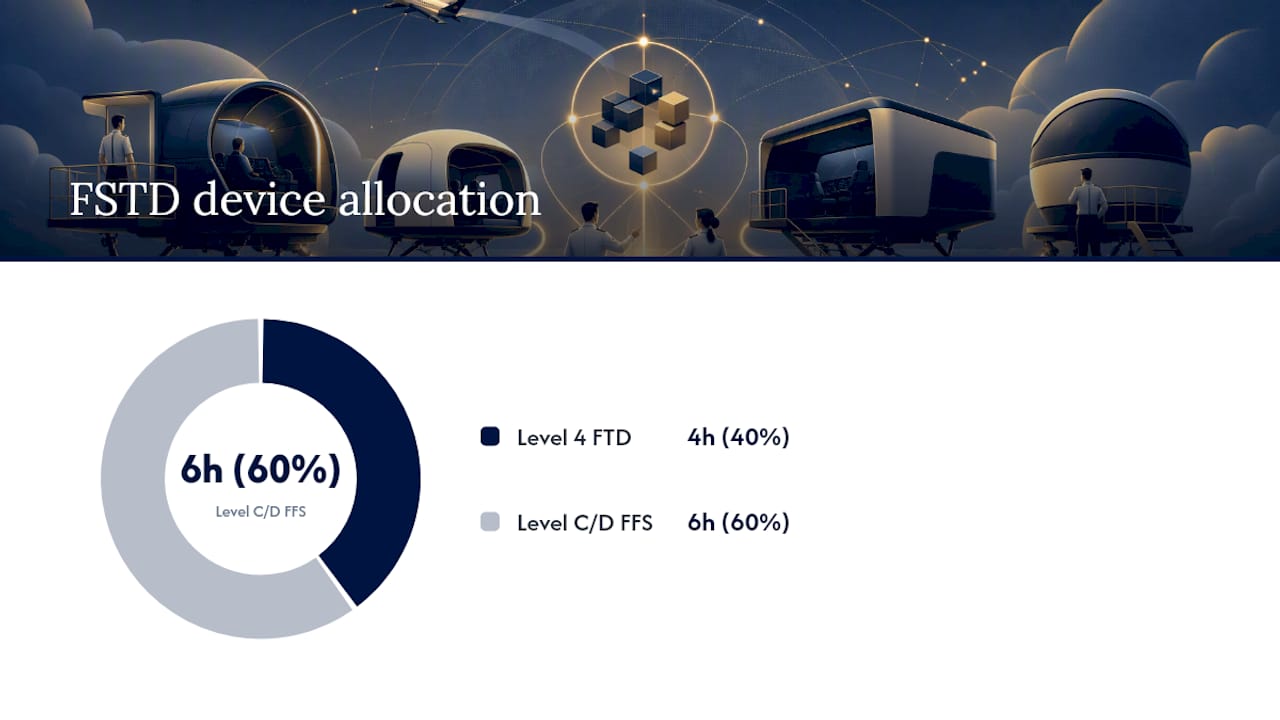
- The simulator training must include at least 10 hours on Level 4 flight training devices and Level C or D full-flight simulators, focusing on stall recovery, upset management, and automation issues.
- Instructors must hold an ATP certificate with an airplane multiengine rating and have specific airline operational experience, especially for teaching advanced modules like automation and CRM.
- The course schedule benefits from a built-in buffer of extra hours to accommodate missed sessions or re-explanations, making the training more achievable within 3 to 5 days.
- A passing score of 70% on all exams and completion of the course through an FAA-approved provider are mandatory, with detailed documentation required for FAA certification and to schedule the ATP knowledge test.
Table of Contents
- ATP CTP Course Outline: How the Two Parts Fit Together
- Academic Training: Stage-by-Stage Module Breakdown
- FSTD Training: Device Levels and Mandated Simulator Topics
- Who Can Teach the Course: Instructor and Provider Standards
- Exams, Pass Standards, and the Graduation Certificate
- How to Prepare for an Intensive ATP CTP Course
- Why Instructor Background Changes What the Syllabus Actually Teaches You
- Complete Your ATP CTP With Level D Training and Airline-Experienced Instructors
- Sources
- FAQ
ATP CTP Course Outline: How the Two Parts Fit Together
Every FAA-approved ATP CTP program is built on the same skeleton: academic instruction first, simulator training second. The academic half teaches concepts. The FSTD half forces you to apply them under realistic transport-category conditions, which is a different skill entirely from reciting them on a whiteboard.
The regulatory backbone for this structure comes straight from AC 61-138, which defines both the academic module topics and the acceptable training device criteria. The FAA’s ATP program page confirms the course applies specifically to applicants pursuing an ATP certificate and ties the requirement back to 14 CFR §61.156.
Here’s the framework as most approved providers schedule it:
- Academic instruction: approximately 30 hours, delivered across four staged modules with exams between stages
- FSTD training: approximately 10 hours, split between a Level 4 FTD and a Level C or D full-flight simulator
- Sequencing: Academic stages must generally be completed, and their exams passed, before simulator training begins
- Scheduling reality: many providers build in 30 to 32 academic hours to leave room for briefings, administrative tasks, and final review, even though the FAA minimum sits at 30
That extra buffer matters more than it sounds like it should. A tightly packed five-day course leaves almost no slack for a missed morning or a re-explained concept, so a provider padding the schedule by an hour or two is protecting your ability to actually finish.
Academic Training: Stage-by-Stage Module Breakdown
The academic half isn’t one long lecture. It’s four distinct stages, each with its own module list and, at most providers, its own stage exam before you move forward.
Stage 1 covers aerodynamics, with a strong lean toward high altitude flight characteristics most private and commercial pilots have never touched: Mach effects, coffin corner, and swept-wing stall behavior. Expect roughly 8 hours here. This is where pilots coming from piston singles encounter, for the first time, why a jet stalls differently at 39,000 feet than a Cessna does at pattern altitude.
Stage 2 moves into meteorology relevant to transport operations: convective weather, wind shear, icing, and the kind of high-altitude weather phenomena that don’t show up in primary training.
Stage 3 is the largest block by topic count. It covers air carrier operations: minimum equipment lists and configuration deviation lists (MEL/CDL), turbine engine systems, transport-category performance planning, automation philosophy, and navigation and communication procedures used in airline operations.
Stage 4 shifts from technical to human factors: crew resource management, leadership, safety culture, and the regulatory framework governing part 121 and 135 operations.
According to The Pilot’s Manual, a widely used syllabus reference, providers typically total these four stages at around 31 academic hours, consistent with FAA guidance and leaving a small margin above the regulatory floor.
- Complete Stage 1 (aerodynamics) and pass its stage exam
- Complete Stage 2 (meteorology) and pass its stage exam
- Complete Stage 3 (air carrier operations) and pass its stage exam
- Complete Stage 4 (CRM and leadership) and pass its stage exam
- Sit the comprehensive final academic exam before moving into simulator training
Stage exams typically draw from a test bank, and any topic you miss gets flagged for review before you’re cleared to move on. Providers reconcile deficient areas rather than letting a borderline pass slide through.
Pro Tip: If you’re coming from a regional turboprop or a light jet, don’t skim Stage 1. The high-altitude aerodynamics module assumes zero prior exposure to swept-wing stall dynamics, and skipping ahead mentally here is the single most common reason candidates struggle on the final exam.
FSTD Training: Device Levels and Mandated Simulator Topics
The simulator half is where the syllabus stops being theoretical. You need a minimum of 10 hours in an approved flight simulation training device, and the FAA allows up to 4 of those hours in a Level 4 FTD, with the remainder completed in a Level C or D full-flight simulator.
Device specs aren’t flexible on paper. Per the ATP CTP Course Approval Job Aid, any FTD used must be Level 4 or higher and include a flight management system, electronic flight instrument displays for both the primary flight display and navigation display, TCAS, and TAWS. If a provider wants to use a device that doesn’t meet those criteria, they have to file a deviation request proving the equipment is objectively equivalent, which is not a formality most training centers bother pursuing.
Simulator sessions aren’t a free-form flight hour. The syllabus mandates specific content:
- Runway safety procedures, including rejected takeoffs and runway incursion avoidance
- High-altitude stall recognition and recovery in a transport-category airframe
- Upset prevention and recovery at altitudes and configurations most candidates have never trained for
- Automation management, including mode confusion scenarios and manual reversion
Each session runs on a prebrief and postbrief structure. Some topics are pass/fail evaluation items; others are demonstration-based, meaning the instructor walks you through the maneuver rather than grading a standalone attempt. Instructors generally clarify which is which before the session starts, since preparing for a graded upset recovery looks different from preparing to simply observe one demonstrated.
Who Can Teach the Course: Instructor and Provider Standards
The FAA doesn’t let just any CFI teach ATP CTP. Instructors need an ATP certificate with an airplane multiengine class rating, along with a minimum amount of documented air-carrier operational experience specified in the job aid. That bar exists because the academic content, particularly air carrier operations and automation philosophy, assumes the instructor has actually operated at that level, not just studied it.
Simulator instructors carry an added requirement: documented knowledge of the specific FTD or FFS device’s operating limitations, since running a Level D session wrong can teach bad habits just as easily as good ones.
Providers must also maintain what the FAA calls an Internal Evaluation Program, which tracks:
- Student quiz and stage-exam performance trends over time
- Overall graduation rates across cohorts
- Instructor and course feedback used to flag weak modules
- Instructor initial and recurrent training records
Instructors themselves go through initial qualification and then recurrent training on a schedule the provider has to document, not a one-time certification that lasts indefinitely.
Exams, Pass Standards, and the Graduation Certificate
Passing isn’t optional partial credit.
Testing draws from a documented pool, generally at least 30 questions per exam per the job aid’s guidance. Fail a topic area, and you go through retraining specific to that deficiency rather than repeating the entire stage from scratch.
The graduation certificate itself isn’t a generic completion slip. It has to include the provider’s name, address, and FAA certificate number, your name and FAA certificate number, a statement confirming completion of ATP CTP as required under §61.156, an issuance date, and a sequential course number. Without it, IACRA won’t let you schedule the ATP knowledge test, full stop.
How to Prepare for an Intensive ATP CTP Course
Most ATP CTP courses run over 3 to 5 days, which means pre-course prep isn’t optional if you want to absorb four academic stages without drowning.
Focus your reading before day one on high-altitude aerodynamics, basic automation concepts, and how to read a transport-category performance chart. These are the topics that trip up pilots coming from piston or light-turbine backgrounds, and having a rough mental model going in changes the entire pace of Stage 1 and Stage 3. Brush up on CRM fundamentals too. FAR familiarity, particularly around part 121 and 135 operations, pays off directly during Stage 4.
Materials like a Pilot’s Manual ATP CTP syllabus reference, the current FARs, and a standard ATP knowledge test prep guide give you a staged way to review, matching the same four-stage structure you’ll see in the course. During simulator sessions, keep a running log of what you practiced and where the instructor gave you feedback. It becomes useful review material later, particularly for the automation and upset-recovery topics that feel unfamiliar the first time through.
Administratively, confirm your documentation, medical currency, and fitness for duty before arrival, and plan how you’ll schedule the ATP knowledge test once you’re holding a graduation certificate in hand.
Pro Tip: Log every simulator session note the same day you fly it. Details about how you handled a specific upset recovery scenario fade fast, and that log becomes the fastest way to prep for the ATP knowledge test’s scenario-based questions later.
Why Instructor Background Changes What the Syllabus Actually Teaches You
The syllabus on paper is identical everywhere. What varies enormously is who’s standing in front of the room when you’re working through Stage 3’s automation module or sitting in the left seat during an upset recovery scenario.
Veteran airline captains bring something a syllabus document can’t: the judgment calls that never make it into an advisory circular. Anyone can teach you what TCAS does. An instructor who’s flown a widebody through actual convective weather can tell you why the automation module matters the way it does in practice, not just on an exam.
At Simulator Center, the FAA’s academic and FSTD requirements map directly onto Level D simulator scenarios built around real airline operating conditions, not generic maneuvers.
— Jake
Complete Your ATP CTP With Level D Training and Airline-Experienced Instructors
If you’re weighing where to complete your ATP CTP, the syllabus requirements themselves narrow the field: you need Level D simulator access and instructors who’ve actually operated at the air-carrier level the course teaches toward. Simulator Center’s ATP-CTP Course is built around exactly that structure, with training delivered on Level D full-motion simulators and instruction from current and former airline captains and examiners, all coordinated within a single program aligned with international aviation authority standards.
That means the scheduling, documentation, and checkride logistics that usually eat up candidates’ time between academic stages and simulator sessions get handled as one coordinated program rather than something you piece together yourself. If you’re an international pilot working through a license conversion alongside your ATP CTP, the same team can coordinate that process too. Visit the ATP-CTP course page to check current scheduling and enroll.
FAQ
What Does the ATP CTP Course Consist Of?
The ATP CTP consists of two parts: about 30 hours of academic instruction across four stages, and about 10 hours of FSTD training on a Level 4 FTD and a Level C or D full-flight simulator. Academic topics cover aerodynamics, meteorology, air carrier operations, and CRM, while the simulator portion focuses on stall recovery, upset recovery, and automation management, per the FAA’s job aid.
Is the ATP CTP Course Hard?
The course is intensive rather than conceptually difficult, especially for pilots without prior transport-category or airline experience. High-altitude aerodynamics and automation management modules tend to challenge candidates coming from piston or light-turbine backgrounds the most, since those topics rarely appear in earlier training.
Do You Need 1,500 Hours for ATP CTP?
No. The ATP CTP itself doesn’t require a minimum number of flight hours to enroll. It’s a training course required before the ATP knowledge test, while flight hour requirements apply separately to the ATP certificate itself under 14 CFR §61.156.
What Is the Best ATP CTP Course?
The strongest programs combine FAA-compliant academic content with Level D simulator access and instructors who’ve held air-carrier operational roles, since that background shapes how automation and CRM modules get taught in practice. Simulator Center’s ATP-CTP program is built on that model, using Level D full-motion simulators and instruction from veteran airline captains.