
Map Your Differences Training to FAA, EASA, CAA & TC Rules for Pilots
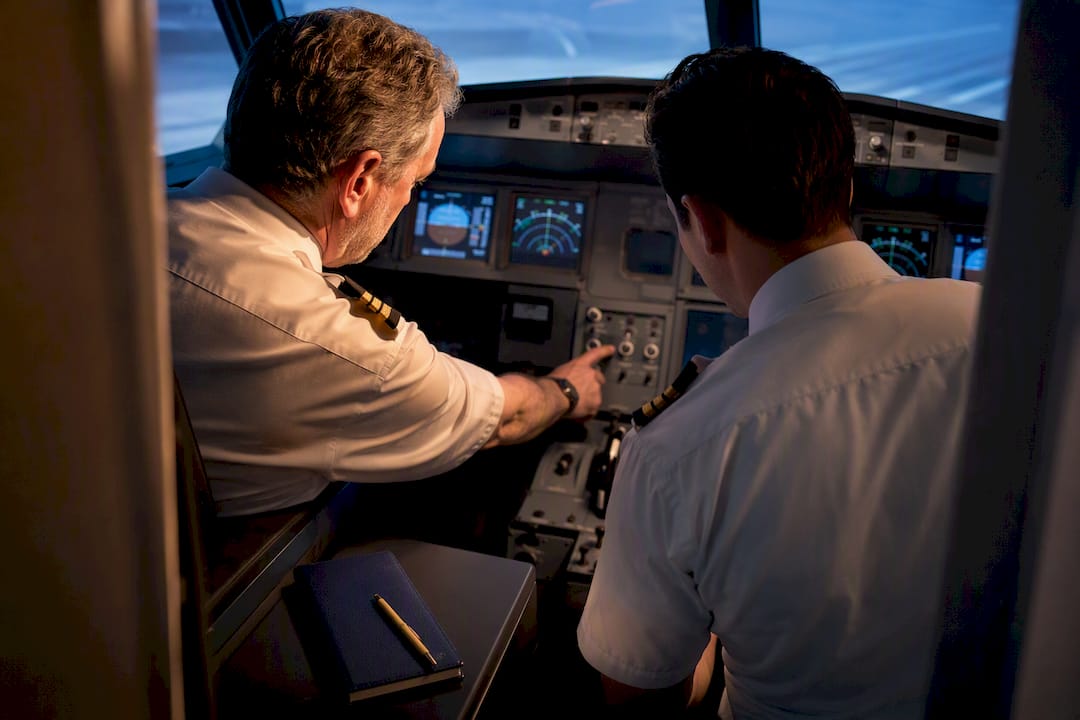
Aircraft differences training is required whenever a pilot moves to a variant that exceeds the privileges of their current type or class rating. It covers only what changed: systems, cockpit layout, limitations, and handling quirks, not a full type rating curriculum. Completion earns a logbook endorsement confirming competence to fly that specific variant.
TL;DR:
- Differences training is mandatory only when a new aircraft variant exceeds a pilot’s current privileges, focusing on systems, cockpit layout, limitations, and handling.
- Most regulators accept simulator training, especially full-motion Level D simulators, as part of the flight training process, offering safety and cost benefits.
- An instructor’s recent, documented experience on the exact aircraft is crucial for quality training, with structured programs emphasizing deliberate practice over one-time checkouts.
- Proper differences training involves both ground instruction and flight application with measurable standards, not just logbook endorsements or minimum hours.
- Recency recommendations vary, but most authorities suggest refreshing or recertifying after two years of no flying that specific variant.
Table of Contents
- Regulatory Overview: Who Requires Differences Training and What They Expect
- What Differences Training Covers: a Practical Syllabus and Completion Standards
- Delivery Methods: Aircraft, Approved Simulators, and When to Choose Each
- Choosing an Instructor and Keeping Proficiency: Questions, the ACE Framework, and Refresher Timing
- What Professional Differences Training Looks Like
- Where to Verify the Rules for Your Jurisdiction
- The Part of Differences Training Everyone Underrates
- Get Your Differences Training From a Level D Provider
- Sources
- FAQ
Regulatory Overview: Who Requires Differences Training and What They Expect
Every major regulator treats differences training the same way in principle: it exists to close the gap between what a pilot already knows and what a new variant demands, without repeating a full initial type rating course. The details of scope, documentation, and recency vary enough that pilots flying internationally need to know all four frameworks.
Under EASA guidance, differences training becomes mandatory the moment a variant exceeds the scope of a pilot’s current privileges. EASA expects training to target the specific systems, cockpit layout, operating limitations, and handling characteristics that differ from the base type, rather than reprocessing material the pilot already holds.
In the United States, commercial operators answer to 14 CFR § 121.418, which mandates that differences training include the ground subjects and flight maneuvers required for initial training, unless the FAA specifically exempts certain items for that operation.
The UK CAA draws a sharper line between differences training and simple familiarization for single-engine piston ratings. Its guidance requires an appropriately qualified TRI, CRI, or FI to deliver the training, and while the endorsement itself doesn’t expire, the CAA recommends refresher training if a pilot hasn’t flown that variant in more than two years.
Transport Canada splits requirements into two tracks:
- Ground-only differences training for variants with minor systems or procedural changes.
- Ground plus flight training for variants with meaningful handling or performance differences, where approved simulators may satisfy the flight component.
Pro Tip: Before booking any course, confirm which regulatory framework governs your certificate. A training block that satisfies EASA might not fully satisfy 14 CFR § 121.418 if you’re flying for a US-certificated operator.
What Differences Training Covers: a Practical Syllabus and Completion Standards
A well-built differences training syllabus splits cleanly into ground instruction and flight application, and both halves need measurable completion standards, not just a signature in a logbook.
Ground topics typically include:
- Systems differences — hydraulics, electrical architecture, fuel system routing, and pressurization logic where they diverge from the base type.
- Cockpit layout and avionics — panel arrangement, EFIS presentation, and any autoflight logic that behaves differently.
- Limitations and performance data — revised V-speeds, weight and balance envelopes, and performance tables specific to the variant.
- Emergency and abnormal procedures — checklist changes, memory item revisions, and manufacturer supplement updates.
Flight topics build on that ground foundation:
- Handling differences — control feel, trim behavior, and any changes in stall or approach characteristics.
- Maneuver demonstrations — the specific maneuvers the regulator or manufacturer flags as different enough to require in-flight practice.
- Abnormal and emergency procedure practice — running the checklist changes under realistic workload rather than just discussing them.
- Applied instrument work — particularly where the new variant introduces a different EFIS suite or avionics logic than the pilot’s home type.
Programs generally follow one of two pathways. A ground-only pathway suits variants with minor systems changes and might run a single session with a written or oral check. A ground-plus-flight pathway adds simulator or aircraft sessions sequenced from systems briefing, to normal operations, to abnormal and emergency scenarios, closing with an evaluation against published completion standards, exactly the model advisory circular AC 61-9B recommends for complex single-engine and light twin transitions.
Delivery Methods: Aircraft, Approved Simulators, and When to Choose Each
Most regulators accept approved simulators for meeting flight training requirements, and for anyone transitioning between complex airliners, that acceptance changes the entire calculus of how training should be sequenced.
Level D full-motion simulators deliver the highest available fidelity for handling and avionics practice, which is why professional training centers lean on them for the bulk of differences training before a pilot ever touches the actual aircraft. Sequencing simulator work first offers real advantages:
- Safety margin — abnormal and emergency procedures get practiced without operational risk.
- Repetition — a maneuver that needs three attempts costs nothing but scheduling time in a simulator.
- Avionics familiarization — glass cockpit transitions benefit enormously from repeated exposure before line flying begins.
- Cost efficiency — simulator hours generally cost less than aircraft hours, and they don’t burn fuel or require weather cooperation.
Simulators aren’t a complete substitute for the aircraft, though. Certain tactile cues, some specific performance checks, and a handful of regulator-mandated maneuvers still require an actual sortie. A pilot moving between the Boeing 757 and 767, for example, will typically complete the bulk of differences work in a Level D device, then confirm real-world handling with limited aircraft time where the operator or regulator requires it. That pairing is common enough that “757 767 differences training” has become its own shorthand among transitioning crews, since the two types share enough architecture that most of the training focuses on cockpit differences rather than aerodynamics.
Choosing an Instructor and Keeping Proficiency: Questions, the ACE Framework, and Refresher Timing
The single biggest variable in differences training quality isn’t the syllabus. It’s the instructor. Someone with a TRI, CRI, or FI qualification but no recent time on your exact variant is a real liability, no matter how good their paperwork looks.
Before booking, ask an instructor:
- Do you hold current TRI, CRI, or FI qualification for this category?
- Do you have documented recent experience on this exact make and model, not just the family?
- Is there a published syllabus with defined completion standards, or are we improvising session by session?
The FAA’s transition training advisory recommends the ACE framework for structuring the process: Analyze the new aircraft’s specific risk points, Create a training plan targeting those points, and Execute with repeated, deliberate practice rather than a one-and-done checkout.
Proficiency doesn’t end at the endorsement. The CAA’s two-year recency guidance is a reasonable outer limit, but treating a differences endorsement as a permanent credential is a mistake. Early hours on a new type carry the highest risk, so a tighter practice cadence during that window matters more than the framework itself.
Pro Tip: Log more than just hours. Track which specific maneuvers or scenarios you’ve practiced since the endorsement. A logbook entry that says “3.2 hours” tells you nothing about whether you’ve actually rehearsed the engine-out procedure that matters most.
What Professional Differences Training Looks Like
A structured differences training program built around regulator syllabi looks fundamentally different from an informal checkout flight, and the gap shows up in outcomes, not just paperwork.
Professional pilot training programs often follow a structured model that sequences full-motion simulator sessions ahead of any aircraft time so pilots can build systems familiarity and handling confidence before workload gets added. Training is ideally delivered by experienced airline captains, with curricula that track regulatory expectations rather than a generic checklist.
What that produces for a pilot completing the program:
- A logbook endorsement documenting exactly what was covered and against what standard.
- A syllabus with defined completion criteria, not a subjective sign-off.
- Support navigating enrollment logistics, including FAA license conversion for internationally licensed pilots moving into US-certificated operations.
Pilots transitioning onto the A320 or into widebody operations on the A330 go through the same simulator-first sequencing before any aircraft-specific requirement kicks in.
Where to Verify the Rules for Your Jurisdiction
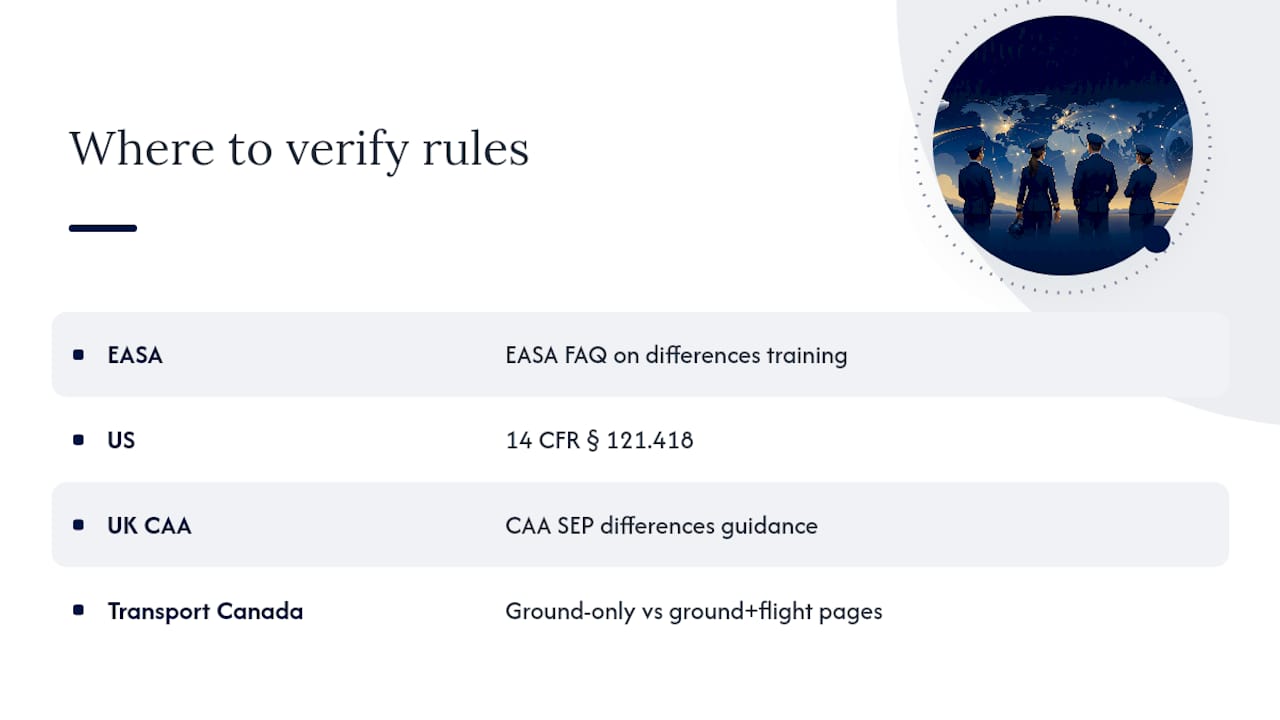
Regulatory text changes, and this article summarizes rather than replaces it. For EASA scope questions, check the EASA FAQ on differences training. US commercial operators should read 14 CFR § 121.418 directly. UK pilots should consult the CAA’s SEP differences training guidance, and Canadian pilots should reference Transport Canada’s differences training pages for ground-only versus ground-plus-flight classifications.
The Part of Differences Training Everyone Underrates
Most guidance on this topic treats differences training as a paperwork exercise: figure out which box the variant falls into, sit through the required hours, get the endorsement, move on. That framing misses what actually causes problems in the first months on a new type.
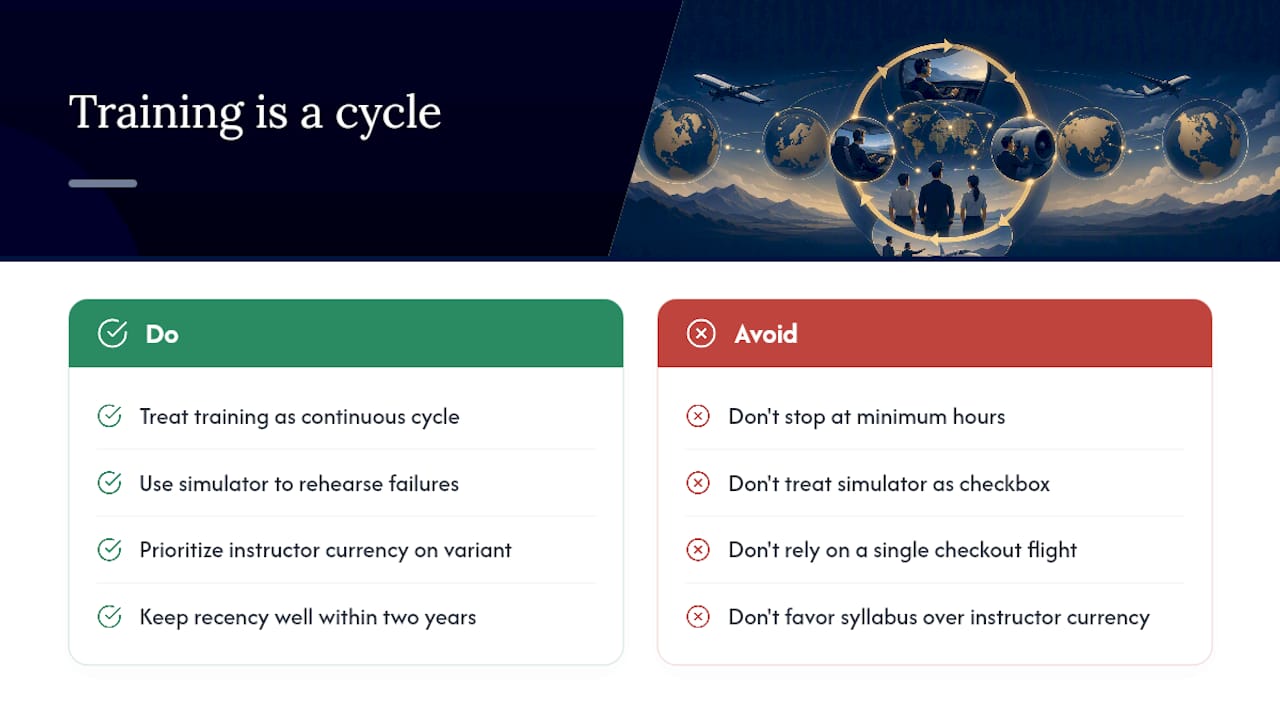
The real risk isn’t failing to meet the minimum ground and flight hours a regulator specifies. It’s stopping at the minimum. The FAA’s own transition training advisory ties inadequate transition preparation to a recurring pattern in general aviation accidents, and the ACE framework it recommends exists precisely because a single checkout flight doesn’t build durable skill. Analyze, create, execute is a cycle, not a one-time event.
If there’s one place conventional advice falls short, it’s treating simulator time as a box-checking substitute for aircraft time rather than what it actually is: the safest place to fail repeatedly until a procedure becomes automatic. Pilots who front-load Level D simulator work before ever touching the aircraft consistently show up more prepared for the parts of a checkout that actually matter, the abnormal procedures nobody wants to practice for real. Prioritize instructor currency on your exact variant first, syllabus completeness second, and treat the two-year recency mark as a ceiling you should never approach, not a target.
— Jake
Get Your Differences Training From a Level D Provider
Most differences training falls short not because the syllabus is wrong, but because it’s delivered by whoever happens to be available rather than someone with recent, documented time on your exact variant. Some providers pair Level D full-motion simulators with instruction from experienced airline captains, aiming to ensure training matches what regulators or hiring airlines expect.

Whether you’re moving between narrowbody types, stepping up to a widebody like the A330, or converting a foreign license for US operations, the same simulator-first sequencing applies: ground briefing, repeated simulator practice, then aircraft-specific application only where required. If you’re planning a transition and want a training plan built around your exact variant rather than a generic template, start with Simulatorcentertraining’s simulator training programs to see current course availability and book your first session.
Sources
- EASA FAQ — Differences training
- Aircraft differences training — Transport Canada (PDF)
- Differences training in SEP class rating — UK CAA
- 14 CFR § 121.418 — Differences training and related aircraft differences training
FAQ
What Is the 1/2/3 Rule in Aviation?
The 1/2/3 rule is a weather planning guideline for alternate airport selection, unrelated to differences training. It’s a common search pairing because both topics fall under regulatory flight planning knowledge pilots need before a transition.
What’s the Hardest Pilot License to Get?
Most pilots and instructors point to the Airline Transport Pilot certificate as the most demanding, given its experience minimums and check-ride standards. Differences training doesn’t substitute for that certification. It only bridges the gap between types once a pilot already holds the appropriate certificate and rating.
What Is the 80/20 Rule in Aviation?
Definitions vary depending on context, and no single canonical aviation standard applies it to differences training specifically, so treat any specific figure with caution unless tied to your own operator’s documented safety program.
What Are the 7 Categories of Aircraft?
Aircraft category classifications under FAA regulations include airplane, rotorcraft, glider, lighter-than-air, powered-lift, powered parachute, and weight-shift-control aircraft. Differences training rules can vary depending on which category and class your target variant falls under, which is why confirming your exact certificate scope matters before booking training.
Do I Need Differences Training or a Full Type Rating?
You need a full type rating when the new aircraft falls outside your current type or class privileges entirely; you need differences training when it’s a variant within a type you’re already rated on, such as 757 767 differences training between closely related Boeing models.
How Long Is a Differences Training Endorsement Valid?
Most frameworks don’t set a hard expiration on the endorsement itself, but the UK CAA recommends refresher training after more than two years without flying that variant, and operators often set their own recency requirements regardless of the regulator’s baseline.