
A320 Simulator Training for Pilots: Level D Type Rating Guide
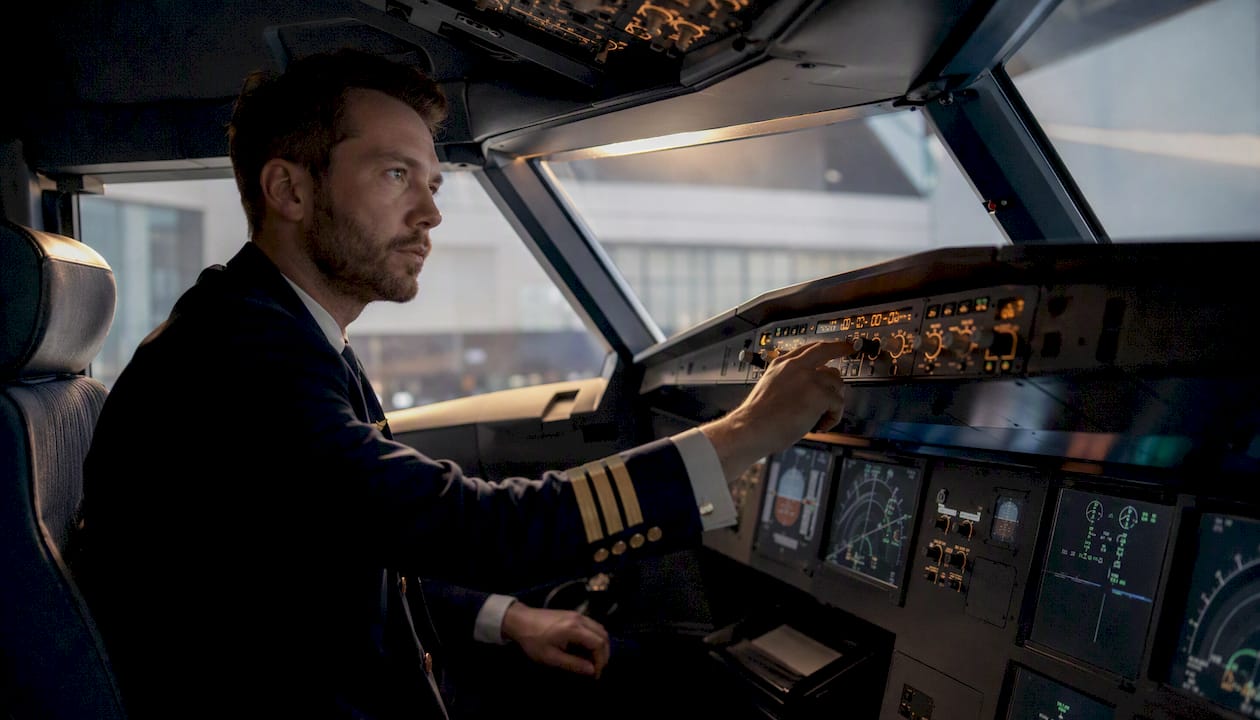
The fastest, career-ready path to an Airbus A320 type rating in the United States is enrolling in an FAA-aligned program that combines 60–70 hours of structured ground school with 32–36 hours in a Level D full-motion simulator, airline-standard SOP/CRM integration, and a formal checkride. That combination is what U.S. carriers expect when they review a candidate’s training record, and it is what separates a credential that opens doors from one that raises questions.
Three facts worth knowing before you go further:
- Device level matters legally. Only Level D Full Flight Simulators carry formal regulatory credit toward a type rating. Lower-level Flight Training Devices cannot substitute for that credit, regardless of how realistic they feel.
- Program length runs several weeks for an initial type rating, covering both ground school and simulator phases in a single intensive block.
- The next step is straightforward. Review the A320 type rating program at Simulatorcentertraining, confirm your eligibility, and contact the admissions team to lock in your start date.
Table of Contents
- What types of A320 simulator programs are available?
- Why does Level D full-motion simulation matter for A320 training?
- Who is eligible and what prerequisites do you need to enroll?
- What does the A320 type rating course curriculum cover?
- How long does A320 type rating training take?
- What does A320 simulator training typically cost?
- How does Level D A320 training map to FAA type rating requirements?
- What are simulator rental and dry-lease options?
- What should you expect on the A320 checkride?
- How do you enroll and handle the logistics?
- What career support do A320 training providers offer after you qualify?
- What does the certification timeline look like from enrollment to type rating?
- Key Takeaways
- The line ops mindset is what separates checkride-ready from airline-ready
- Simulatorcentertraining: the direct path to an FAA A320 type rating
- Selected sources and further reading for pilots booking A320 training
What types of A320 simulator programs are available?
Not every pilot needs the same program. The right choice depends on where you are in your career and what credential or proficiency outcome you need.
- Initial type rating. For pilots with no prior A320 qualification. Delivers a full FAA-recognized A320 type rating upon successful checkride completion. This is the full package: ground school, systems integration, simulator sessions, and examiner sign-off.
- Upgrade or conversion. For pilots already holding a type rating on another aircraft type who are transitioning to the A320 family. The ground school phase is typically compressed because instrument and multi-engine procedures are already established; the focus shifts to Airbus fly-by-wire logic, MCDU flows, and automation philosophy.
- Recurrent and refresher training. For current A320 operators who need to maintain currency, satisfy airline recurrent requirements, or sharpen specific skills after a period off the line. These programs target known weak areas rather than rebuilding from scratch.
- Requalification. For pilots whose A320 type rating has lapsed. The syllabus mirrors initial training in structure but can be compressed depending on recency and documented experience.
- Dry-lease and hourly simulator sessions. For pilots preparing for airline assessments (Spirit, United, Frontier, JetBlue, and similar carriers), validating airline-specific SOPs, or completing targeted skill blocks. No structured syllabus required; the pilot or operator defines the mission objectives.
Simulatorcentertraining delivers all of these in formats that range from intensive 28–35-day residential blocks to modular part-time scheduling and standalone hourly bookings. The intensive block is the most efficient route for initial ratings; hourly sessions work well for assessment prep or a focused refresh on a specific maneuver set.
Why does Level D full-motion simulation matter for A320 training?
The short answer: it is the only device that counts for regulatory credit, and it is the only device that actually replicates what the aircraft does.
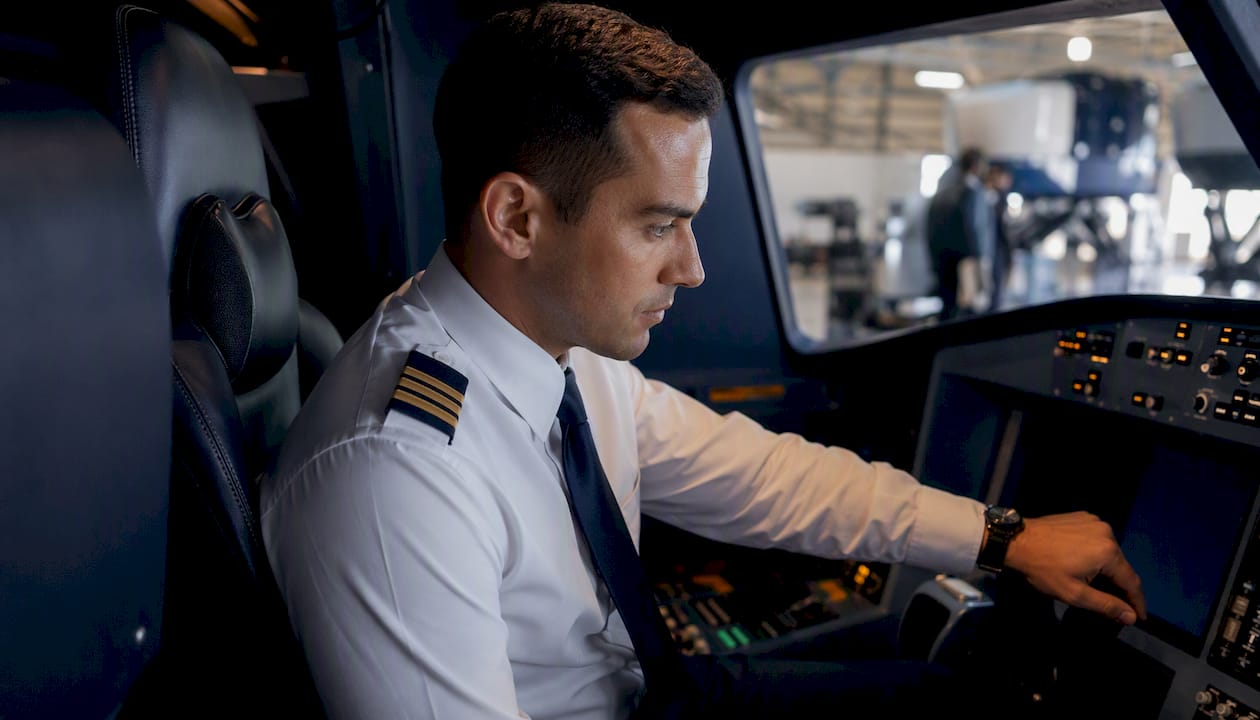
A Level D Full Flight Simulator meets the highest certification standard recognized by the FAA, EASA, and ICAO. That means six degrees of freedom (6 DOF) motion cueing, a high-fidelity aerodynamic and flight model matched to the actual aircraft, 4K visual systems, and an exact cockpit replication down to the sidestick feel and ECAM behavior. When you pull the thrust levers back over the threshold in a Level D device, the motion platform pitches and the visual scene responds the way the real aircraft does. Lower-level simulators simply cannot replicate that fidelity.
The training benefits go beyond realism. Level D simulation lets you practice engine failures at V1, hydraulic system degradations, unreliable airspeed scenarios, and TCAS RAs without any actual risk. You can pause, reset, and repeat a rejected takeoff ten times in a single session. That kind of deliberate repetition on high-stakes scenarios is impossible in the aircraft and is exactly what builds the procedural muscle memory examiners look for on a checkride.
Automation transition is another area where Level D fidelity pays off. The A320’s fly-by-wire envelope protection and autoflight logic behave differently from Boeing or turboprop systems. Practicing MCDU programming, managed versus selected modes, and alpha floor activation in a device that responds exactly like the aircraft accelerates the mental model transfer to line operations.
Who is eligible and what prerequisites do you need to enroll?
Entry requirements for an initial A320 type rating program are straightforward, but you need to have the paperwork in order before your start date.
- Pilot license — A valid CPL or ATPL (or FAA equivalent) is required. The license must be current and issued by a recognized authority.
At enrollment, Simulatorcentertraining will ask for copies of your pilot license, medical certificate, government-issued ID, and relevant logbook pages. International pilots should also confirm their license is recognized under FAA rules or arrange an FAA license conversion before the program begins. Getting those documents submitted early prevents delays once simulator blocks are scheduled.
What does the A320 type rating course curriculum cover?
The program runs in four phases, and each one builds directly on the last.
- Ground school and systems (60–70 hours). Covers A320 aircraft systems in depth: hydraulics, pneumatics, electrical, fuel, flight controls, and avionics. This phase establishes the systems knowledge that makes simulator sessions productive rather than confusing.
- Systems integration and MCDU/automation flows. Bridges ground school theory and simulator practice. Pilots work through MCDU programming sequences, FMS route construction, performance calculations, and automation logic until the flows are automatic. This phase is as important as manual handling for modern Airbus operations, because the aircraft’s fly-by-wire philosophy assumes the crew manages automation precisely.
- Practical simulator modules (32–36 hours, Level D FFS). Structured around normal operations first, then non-normal and emergency scenarios. Sessions progress from basic aircraft handling and traffic pattern work to LOFT scenarios, abnormal checklists, and multi-crew emergency management. SOP adherence and CRM are assessed from the first session, not just at the checkride.
- Checkride preparation. Final simulator sessions focus on examiner-standard performance: precise callouts, SOP discipline, go-around execution, rejected takeoffs, and emergency handling under time pressure. The instructor runs mock oral exams alongside the simulator sessions.
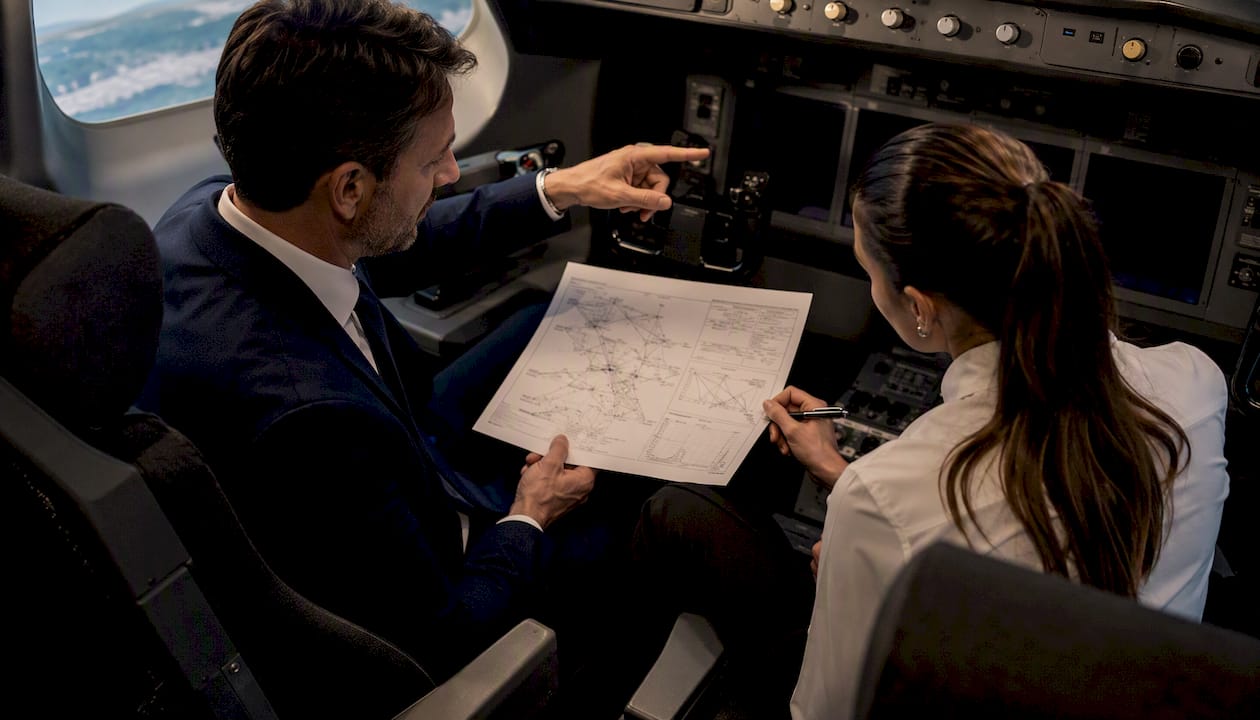
Each simulator session follows a consistent structure: pre-flight briefing, simulator mission, and structured debrief with instructor feedback. The debrief is where most of the learning actually happens. Instructors at Simulatorcentertraining use SOP adherence checklists and error management frameworks to give candidates specific, actionable feedback rather than general impressions.
Pro Tip: Book your simulator time in 4-hour blocks rather than single hours. A one-hour slot barely covers the briefing and one scenario pass. A 4-hour block gives you time to brief properly, run two or three scenario iterations, and debrief with enough data to make the next session count.
How long does A320 type rating training take?
For an initial type rating, plan on 28–35 days on site. That covers ground school and Level D simulator time, with some buffer for scheduling and administrative steps.
Scheduling formats vary:
- Intensive daily blocks. The standard format for initial type ratings. Ground school runs in the mornings; simulator sessions fill the afternoons and evenings. This compresses the calendar and keeps knowledge fresh between phases.
- Modular part-time scheduling. Ground school modules can sometimes be spread across weekends or evenings for pilots who cannot take a full month away from work. Simulator blocks are then scheduled in concentrated bursts once ground school is complete.
- Hourly bookings. Used for recurrent training, assessment prep, or targeted skill work. Simulatorcentertraining offers 24/7 simulator availability at its Miami Springs hub, which means early-morning or late-night slots are genuinely available for pilots with tight schedules.
International students typically combine their training block with a single trip: arrive two days before ground school starts, complete the program, and depart after the checkride. Simulatorcentertraining’s admissions team can assist with housing recommendations and scheduling logistics to minimize downtime between phases.
What does A320 simulator training typically cost?
Pricing for A320 type rating training varies, and the range is wide enough that two quotes from different providers can look dramatically different without being comparable. Understanding what drives the price helps you evaluate quotes accurately.
Primary pricing drivers:
- Device level. Level D FFS time costs more than FTD time, and it should. The regulatory credit it provides is the entire point of the program.
- Simulator hours included. Initial type rating programs typically include 32–36 hours of FFS time. Programs that advertise fewer hours may be cutting the simulator phase short, which affects checkride readiness.
- Instructor qualifications. Instruction from active or former airline captains with A320 line experience commands a premium over generic flight instructor rates. The quality of the debrief is directly tied to the instructor’s operational background.
- Checkride and examiner fees. These are separate from training fees and vary by examiner and scheduling.
- Administrative and exam fees. Written test fees, documentation processing, and any required FAA coordination add to the total.
- Scheduling premiums. Rush bookings or peak-demand slots may carry a surcharge. Planning four to six weeks ahead typically avoids this.
Common billing models:
- Hourly simulator rental. Used for dry-lease and assessment prep sessions. You pay per hour of FFS time, with or without an instructor.
- Packaged block pricing. A fixed fee covers a defined number of simulator hours, often used for recurrent or refresher programs.
- Full program bundle. Ground school, simulator hours, instructor time, and checkride prep are priced as a single package. This is the most transparent model for initial type ratings because it eliminates surprise add-ons.
Pro Tip: When requesting a quote, ask for a line-item breakdown: simulator hours, instructor time, ground school, exam fees, and cancellation/rescheduling terms. A quote that bundles everything into one number without detail makes it impossible to compare providers fairly.
How does Level D A320 training map to FAA type rating requirements?
The regulatory pathway from training to type rating issuance follows a defined sequence, and the device level is the critical variable at every step.
- Authorized training organizations. Type rating training must be conducted by an FAA-approved training organization or under an FAA-accepted training program. Simulatorcentertraining’s programs are structured to align with FAA requirements for A320 type rating qualification.
- Level D FFS credit. The FAA recognizes Level D Full Flight Simulator time as fully creditable toward the simulator hours required for type rating training. This is the regulatory basis for why device qualification matters: a non-certified device cannot generate the training record the FAA requires.
- FAA ATP-CTP. Pilots pursuing an FAA Airline Transport Pilot certificate alongside their type rating must complete the ATP-CTP course before taking the ATP written exam. Simulatorcentertraining offers ATP-CTP training as a standalone program that can be combined with A320 type rating preparation.
- ICAO and EASA alignment. The program structure aligns with ICAO Doc 9868 training standards and EASA Part-FCL type rating requirements, which means pilots trained here are positioned to seek recognition from multiple authorities, not just the FAA.
- Documentation at completion. Upon completing the program and passing the checkride, candidates receive training certificates and instructor sign-offs. These documents are submitted to the FAA (or the relevant authority) to support type rating endorsement on the pilot’s certificate.
International pilots who hold ICAO, EASA, or DGCA licenses and need FAA validation should address the license conversion step before or alongside type rating training. The admissions team at Simulatorcentertraining coordinates this regularly.
What are simulator rental and dry-lease options?
Dry-lease and hourly simulator rental serve a different purpose than packaged type rating training. The distinction matters before you book.
- What dry-lease means. You rent the Full Flight Simulator by the hour or block without a structured syllabus. You bring your own training objectives, and the operator provides the device, maintenance, and instructor station access. Some operators include a safety pilot or technical monitor; others do not.
- Common use cases. Airline assessment preparation (replicating the specific profile used by a target carrier), airline SOP validation for new hire classes, custom training mission design for operators with their own approved programs, and recurrent proficiency work outside a formal syllabus.
- What operators typically include. Device maintenance and qualification documentation, instructor station access, avionics and loadout configuration matching the target aircraft variant, and scheduling windows. Note that dry-lease sessions do not generate the same documented training record as a formal type rating program and cannot substitute for certified training credit.
- When to choose dry-lease vs. packaged training. If you already hold an A320 type rating and need to prepare for a specific airline’s simulator assessment, dry-lease or hourly sessions give you the flexibility to replicate that carrier’s exact profile. If you need the type rating itself, a packaged program with documented instructor sign-offs and a formal checkride is the only route.
Simulatorcentertraining offers professional simulator rental for both hourly and block bookings, with 24/7 availability at the Miami Springs hub.
What should you expect on the A320 checkride?
The checkride is a formal evaluation conducted by an FAA-designated examiner or authorized check airman. Knowing what gets assessed prevents surprises.
- Normal operations. Takeoff, departure, cruise, approach, and landing in standard conditions. The examiner is watching for SOP adherence, callout discipline, and smooth automation management, not just stick-and-rudder precision.
- Non-normal and emergency handling. Engine failure at V1, hydraulic failures, electrical abnormals, pressurization events, and TCAS RAs are common. The examiner expects you to identify the abnormality, apply the correct checklist, and communicate clearly with the other crew member.
- MCDU and automation management. Programming a diversion, managing managed versus selected modes during an unexpected routing change, and handling FMS discontinuities are all fair game.
- CRM and briefing discipline. How you brief the approach, how you divide tasks under pressure, and how you manage crew workload are assessed throughout. A technically correct maneuver executed with poor crew coordination will still draw a comment.
- Go-arounds and rejected takeoffs. Both are high-workload events where procedural discipline matters. The examiner will induce them at the worst possible moment.
Common failure modes include breaking SOP under pressure (skipping callouts when workload spikes), late or incorrect checklist application on abnormals, and poor CRM during LOFT scenarios. Remediation typically means targeted simulator blocks focused on the specific failure area, not a full program repeat.
How do you enroll and handle the logistics?
Getting from intent to a confirmed reservation takes about a week if your documents are in order.
- Step 1: Eligibility check. Review the prerequisites (CPL/ATPL, ME/IR, Class 1 medical, ICAO English Level 4+) and confirm your license is FAA-recognized or arrange conversion.
- Step 2: Documentation submission. Gather your pilot license, medical certificate, government ID, and logbook excerpts. International pilots should include their current license and any existing type rating certificates.
- Step 3: Deposit and payment. Secure your program dates with a deposit. Confirm the cancellation and rescheduling policy in writing before paying.
- Step 4: Schedule ground school and simulator blocks. Work with the admissions team to sequence ground school first, then simulator sessions. For intensive programs, these overlap in the final week.
- Step 5: Travel and housing. The Miami Springs hub is close to Miami International Airport. Plan to arrive at least one day before ground school starts to handle any administrative steps and adjust to the time zone if traveling internationally.
Pro Tip: Book simulator time in 4-hour blocks from the start. Single-hour slots fragment the learning and make it hard to run a complete scenario with briefing and debrief. Multi-session blocks also give the instructor enough data across sessions to track your progress and adjust the training plan.
For international pilots, Simulatorcentertraining’s admissions team provides visa guidance and logistical support. The admissions page covers the full enrollment process and document requirements.
What career support do A320 training providers offer after you qualify?
The type rating certificate is the credential; what happens next depends partly on the training provider’s network and partly on how well the program prepared you for airline-standard operations.
Simulatorcentertraining’s programs are built around airline-standard SOPs and CRM from day one, which means graduates arrive at airline interviews and simulator assessments already operating the way line crews operate. That alignment with carrier expectations is the most practical form of career support a training provider can offer.
Beyond that, providers with strong industry relationships can connect graduates with airline contacts, provide reference letters from instructor captains with active airline backgrounds, and advise on which carriers are actively hiring A320-qualified pilots. The instructor cadre matters here: an instructor who flew the A320 for a major carrier last year has current knowledge of what specific airlines look for in a new hire assessment.
Post-training support also includes access to recurrent training slots and refresher sessions as pilots move through their careers. A provider that offers ongoing simulator access means you can return for currency training or assessment prep without starting the relationship over.
What does the certification timeline look like from enrollment to type rating?
The sequence is predictable once you understand the steps.
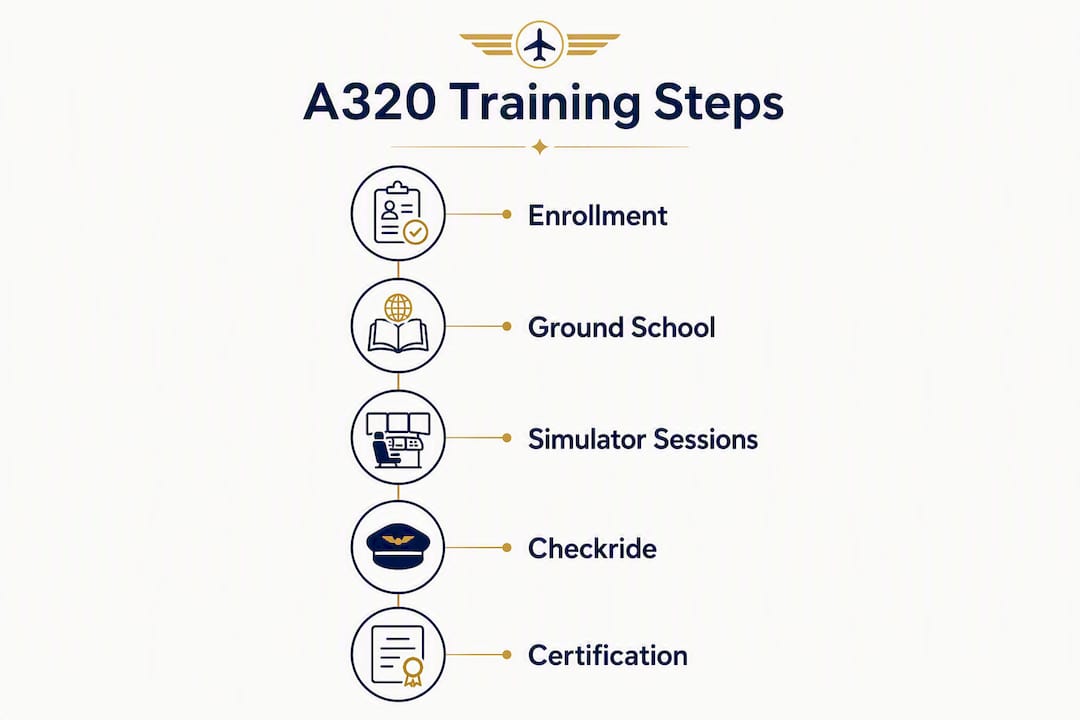
Week 1–2: Ground school. Systems knowledge is built in structured daily sessions covering all major A320 aircraft systems. Written assessments confirm comprehension before simulator access begins.
Week 2–4: Simulator training (32–36 hours). Sessions progress from normal operations to non-normal and emergency scenarios. LOFT exercises and multi-crew coordination are introduced in the middle phase. The final simulator sessions are dedicated checkride preparation runs.
Week 4–5: Checkride. The formal evaluation with an FAA-designated examiner or authorized check airman. Oral examination covers systems knowledge; the practical test covers the full maneuver profile.
Post-checkride: Documentation and type rating issuance. Training certificates and instructor sign-offs are submitted to the FAA. The type rating endorsement is added to the pilot’s certificate, typically within days of the checkride for U.S.-licensed pilots. International pilots may have additional steps depending on their licensing authority’s validation process.
Total elapsed time from enrollment confirmation to type rating in hand: just over a month to several weeks for most candidates, assuming documents are submitted promptly and no rescheduling is needed.
Key Takeaways
FAA-aligned Level D A320 type rating training at Simulatorcentertraining combines 60–70 hours of ground school with 32–36 hours of certified full-motion simulator time, delivering a career-ready credential in 28–35 days.
| Point | Details |
|---|---|
| Device qualification is non-negotiable | Only Level D Full Flight Simulators generate regulatory credit toward an FAA A320 type rating. |
| Program length is 28–35 days | Initial type ratings cover ground school and Level D simulator time. |
| Book 4-hour simulator blocks | Multi-hour blocks allow proper briefing, scenario practice, and debrief, maximizing learning transfer. |
| Confirm the full cost breakdown | Request a line-item quote covering simulator hours, instructor time, exam fees, and rescheduling terms. |
| Simulatorcentertraining delivers the full pathway | Level D devices, FAA-aligned syllabus, airline-captain instructors, and ATP-CTP support in one program. |
The line ops mindset is what separates checkride-ready from airline-ready
Most pilots focus on maneuver precision when they think about simulator training. That is understandable, but it misses the point of how modern Airbus operations actually work.
The A320 is an automation-centric aircraft. The crew’s primary job is managing the flight management system, monitoring automation states, and making decisions. Manual handling matters, but it is a small fraction of what an examiner or airline check airman is actually watching. What they are watching is whether you brief like a line crew, manage workload like a line crew, and debrief like a line crew.
The brief-fly-debrief structure is not a training formality. It is the mechanism by which professional pilots build and refine mental models. A pilot who walks into the simulator without a structured brief and walks out without a structured debrief is leaving most of the learning on the table. The scenario itself is just the data collection event. The debrief is where the pattern recognition gets built.
Instructors who have flown the A320 on the line bring something that a ground-based instructor cannot: they know exactly which automation state transitions catch new A320 pilots off guard, which callouts get dropped under pressure, and which LOFT scenarios reveal CRM gaps that written tests never surface. That operational knowledge is what makes the difference between a candidate who passes the checkride and one who is genuinely ready for line flying on day one.
The advice is simple: treat every simulator session as if it were a real line operation. Brief it that way. Fly it that way. Debrief it that way. The checkride will take care of itself.
Simulatorcentertraining: the direct path to an FAA A320 type rating
Simulatorcentertraining gives you something most training programs do not: a complete, FAA-aligned A320 type rating program in a single location, with Level D full-motion simulators, instruction from active and former airline captains, and a curriculum built around airline-standard SOPs and CRM from day one.
The program runs 28–35 days for an initial type rating, covering ground school and Level D simulator time, and finishing with a formal checkride. International pilots can combine the program with FAA license conversion services and receive admissions support for visa and logistics. Pilots who need ATP-CTP credit alongside their type rating can complete the ATP-CTP course as part of the same visit.
The next step is concrete: visit the A320 type rating enrollment page, confirm your program dates, and submit your documents to the admissions team. Simulator slots fill quickly, so securing your block early is the practical move.
Selected sources and further reading for pilots booking A320 training
- A320 Type Rating Program — Full syllabus, device qualification details, eligibility requirements, and enrollment information for the initial A320 type rating.
- A320 Level D Simulator Training — Hourly and block simulator session booking, assessment prep, recurrent training, and dry-lease options.
- FAA License Conversion — Conversion services for international pilots holding ICAO, EASA, DGCA, or GCAA licenses who need FAA validation before or alongside type rating training.
- ATP-CTP Course — ATP-CTP preparation for pilots pursuing FAA Airline Transport Pilot certification alongside or after type rating training.
- Admissions and Enrollment — Document requirements, application process, payment, and scheduling for all programs.
- Simulatorcentertraining Main Site — Company overview, contact information, and links to all program pages.
- Full flight simulator — Wikipedia — Background on FFS certification levels, regulatory standards, and the distinction between Level D devices and lower-level training aids.
- Airline transport pilot licence — Wikipedia — Overview of ATPL requirements and how type ratings fit within the licensing framework.