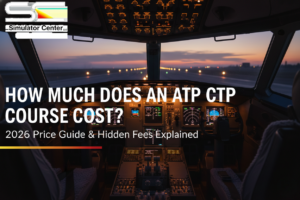
The cost of an ATP CTP course is a major investment in your aviation career, typically ranging between $4,000 and $5,000 for the training alone. While many pilots focus only on the sticker price, understanding the total financial commitment—including hidden fees and travel—is essential for proper planning. Simulator Center LLC provides a high-value, comprehensive solution that ensures you aren’t just passing a test, but preparing for the flight deck of a major airline.
Quick Answer: The Average Cost of ATP CTP in 2026
In 2026, most pilots can expect to pay a national average of $4,200 to $4,800 for the Airline Transport Pilot Certification Training Program (ATP CTP). This base price covers the FAA-mandated 30 to 32 hours of ground school and 10 hours of simulator time.
What is Included in the Base Price?
When you pay for an ATP CTP course, you are essentially paying for “bridge training.” This includes:
- Ground School: Classroom instruction on high-altitude aerodynamics, weather, and air carrier operations.
- Sim Time: Use of Fixed Base Training Devices (FTD) and Full Flight Simulators (FFS).
- Instructors: Guidance from experienced airline captains.
Why Prices Vary by Location and Equipment
Not all training centers are priced equally. Factors like the age of the simulators, the cost of real estate in hubs like Miami or Orlando, and the availability of instructors influence the price. For example, a center using older simulators might charge less, but training on modern, high-fidelity Level D simulators—like those offered by Simulator Center LLC—provides a much more realistic experience that pays off during your airline interview.
Detailed Cost Breakdown: Where Your Money Goes
The ATP CTP is a highly regulated curriculum. Your tuition is split between two main phases of learning.
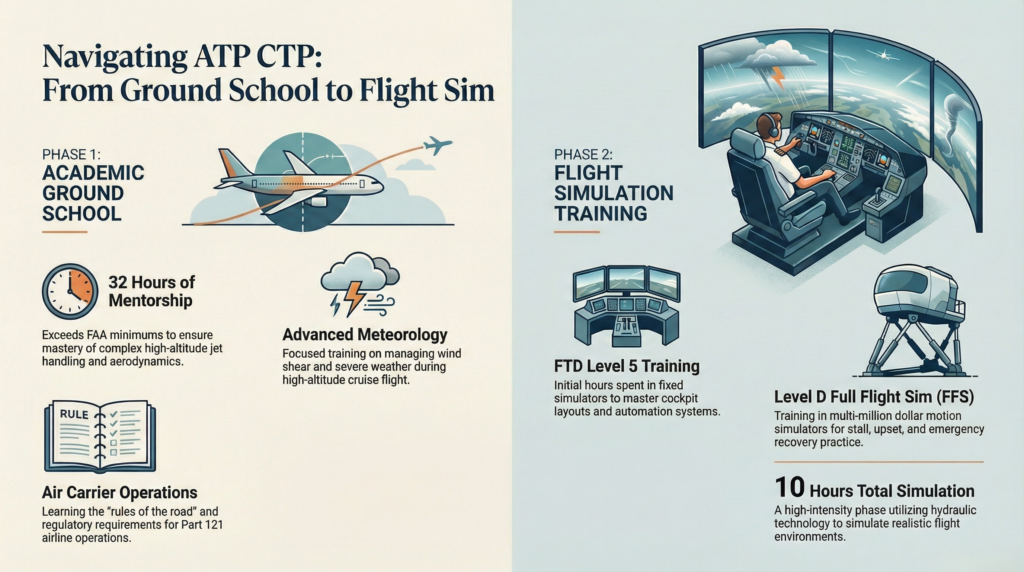
Academic Ground School (32 Hours of Training)
At Simulator Center LLC, the curriculum often goes beyond the bare minimum. While the FAA requires 30 hours, an extra two hours of mentorship ensures you truly grasp complex subjects like:
- High-Altitude Aerodynamics: How jets handle in thin air.
- Meteorology: Dealing with wind shear and severe weather at cruise altitudes.
- Air Carrier Operations: Learning the “rules of the road” for Part 121 airlines.
Flight Simulation Training (10 Hours Total)
This is the most expensive part of your training because of the technology involved.
- FTD Level 5 Training: You spend the first few hours in a “fixed” simulator to learn cockpit layouts and automation.
- Full Flight Simulator (FFS) Level D Training: This is a multi-million dollar machine that moves on hydraulic legs to simulate every bump and turn. This is where you practice stalls, upsets, and emergency recoveries.
The “Hidden” Costs of ATP CTP
The “sticker price” of the course is rarely your final expense. Pilots should budget an additional $800 to $1,500 for the following:
- ATM Knowledge Test Fees: After completing the course, you must take the FAA “ATM” written exam. This typically costs about $175 per attempt and is paid directly to the testing center (like PSI), not the flight school.
- Travel and Lodging: Unless you live in Florida near Simulator Center LLC’s hubs, you will need to budget for a hotel for 7 to 8 days. Many students spend $700 or more on lodging and rental cars.
- Study Materials: While many resources are provided, you may want to purchase prep apps like Sheppard Air to ensure you pass the written exam on your first try.
Financing and Payment Options
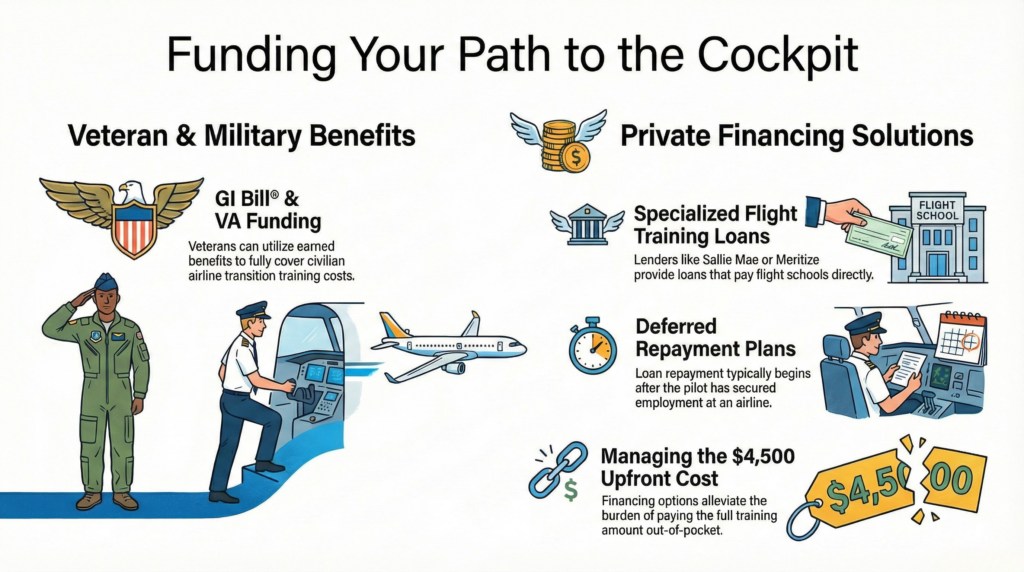
Paying $4,500 upfront is a challenge for many time-building pilots. Fortunately, there are several ways to manage the cost.
VA Funding and GI Bill® Benefits
Veterans can often use their benefits to cover the cost of training. This is a popular route for military pilots transitioning to civilian airlines.
Private Pilot Training Loans
Lenders such as Sallie Mae or Meritize offer specialized flight training loans. These work like student loans: you apply, undergo a credit check, and the lender pays the school directly. You then repay the loan over several years once you are working at an airline.
How to Get Your ATP CTP for Free
Did you know you might not have to pay for this course at all? Many regional airlines are so desperate for pilots that they offer ATP CTP Sponsorships.
If you have 1,500 hours (or meet R-ATP minimums), you can interview with an airline like SkyWest, Envoy, or Republic. If they hire you, they will pay for your ATP CTP course, your hotel, and even give you a small stipend while you train. This is the most cost-effective way to get certified, though it often requires you to sign a contract to fly for that airline for a year or two.
Special Focus: FAA License Conversion Costs
For international pilots (EASA, DGCA, ICAO), the ATP CTP is the gateway to a U.S. career. However, conversions come with unique costs:
- Verification of Authenticity: The FAA must verify your foreign license, which takes time and may involve small administrative fees from your home country.
- TSA/FTSP Fees: Non-U.S. citizens must undergo a TSA security background check before training in a simulator. This costs roughly $130.
- M-1 Visa Costs: If you are coming to the U.S. specifically for training, you will need a student visa, which involves SEVIS fees and consulate appointments.
Simulator Center LLC specializes in these conversions, helping international pilots navigate the paperwork and budgeting required to fly in the States.
Why Choose Simulator Center LLC for Your Training?
When you choose Simulator Center LLC, you aren’t just another number in a “pilot factory.” Based in Florida, they offer a personalized, “family-style” atmosphere led by veteran Airline Captains.
They provide the state-of-the-art Level D Full-Motion Simulators needed for the ATP CTP, but they also offer a clear path to A320 or B737 Type Ratings. By bundling your ATP CTP with a Type Rating, you can often save money and time, making you “airline ready” in a single trip.
People Also Ask (FAQ)
1. Does the ATP CTP result in an actual Pilot Rating? No. The ATP CTP is a prerequisite. After you pass the course and the written exam, you still need to complete a practical checkride (usually during your airline’s initial training) to receive your ATP certificate.
2. How long is the ATP CTP graduation certificate valid? Your graduation certificate never expires, but your ATM Written Exam results are valid for 60 calendar months (5 years).
3. Is the ATP CTP course the same as the ATP Practical Checkride? No. Think of the ATP CTP as the “ground school and sim prep” and the checkride as the final “driving test.”
4. What happens if I fail the ATM written exam? You can retake the exam, but you will have to pay the testing fee again. This is why using a prep course like Sheppard Air is highly recommended.
5. Can I start a Type Rating immediately after ATP CTP? Yes! Many students at Simulator Center LLC transition directly from their ATP CTP into an Airbus A320 or Boeing 737 Type Rating course to maximize their employability.
6. Do I need a First Class Medical to take the ATP CTP? While you don’t technically need it for the course, you will need a First Class Medical to exercise the privileges of an ATP certificate at an airline, so it’s best to have one before you spend the money on training.
Ready to Take the Next Step?
Don’t leave your aviation career to chance. Join the ranks of successful pilots who have launched their careers through Simulator Center LLC. Whether you are a local pilot or an international captain looking for an FAA conversion, we have the expertise to get you to the flight deck.
[Contact Simulator Center LLC Today to Schedule Your ATP CTP Course!]