If you are a time-building pilot racing toward the 1,500-hour milestone, you are likely looking for every legitimate way to maximize your logbook. The good news is that you can absolutely count simulator hours toward your Airline Transport Pilot (ATP) flight time requirements, but the Federal Aviation Administration (FAA) enforces strict regulatory limits on how these hours are applied. Understanding the exact boundaries of these credits is essential to avoid a costly rejection on the day of your checkride.
Navigating the complex language of the Federal Aviation Regulations (FARs) can be challenging. Many pilots accidentally mislog their time or assume their hours count when they do not meet the FAA’s strict hardware standards. Let’s break down exactly how the regulations work, which devices qualify, and how you can maximize your aeronautical experience legally.
The Short Answer: Yes, But the FAA Has Strict Limits
Flight Time vs. Aeronautical Experience: The Critical Logbook Distinction
Before diving into the numbers, it is vital to understand how the FAA views a simulator. According to 14 CUFR Part 1, “flight time” only occurs when you are in an actual aircraft moving under its own power. Because a simulator never leaves the ground, simulator time can never be logged as actual flight time. Instead, the FAA permits pilots to credit approved simulation sessions toward the total “aeronautical experience” requirements required for a certificate or rating. When you fill out your IACRA application for the ATP checkride, your simulator time must be entered into specific training device columns rather than your total aircraft time column.
The 100-Hour Maximum Allowance under 14 CFR § 61.159
Under the standard rules of 14 CFR § 61.159, the FAA allows an applicant for an unrestricted ATP certificate to credit a maximum of 100 hours of aeronautical experience obtained in an approved aviation training device. However, this 100-hour ceiling is not automatic. To claim the full 100 hours, the time must be accomplished as part of an approved training course under Part 121, 135, 141, or 142. If your simulator time was completed outside of these specific, structured training curricula, the FAA caps your total simulator credit at a much lower limit—typically a maximum of 25 hours.
Device Classifications: Not All Simulators Are Created Equal
Basic & Advanced Aviation Training Devices (BATDs/AATDs) vs. ATP Requirements
The FAA categorizes synthetic training equipment into distinct tiers, and each tier carries different logbook privileges. Basic Aviation Training Devices (BATDs) and Advanced Aviation Training Devices (AATDs) are highly common at local flight schools. While these devices are fantastic for earning a Private Pilot certificate or keeping your Instrument proficiency current, they face strict limitations at the ATP level. You cannot use a generic AATD to build random hours toward your 100-hour ATP simulator allowance unless that device is explicitly tied to an FAA-approved Part 141 or Part 142 curriculum with a formal Letter of Authorization (LOA).
Flight Training Devices (FTDs) and Full Flight Simulators (FFSs)
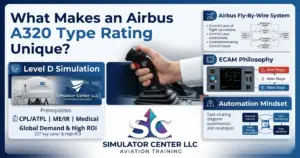
To unlock the highest levels of simulator credit, you must train in advanced hardware. Flight Training Devices (FTDs) represent specific cockpit layouts (Levels 4 through 7) without full motion. Full Flight Simulators (FFSs), designated as Levels A through D, feature highly sophisticated visual displays and full-motion hydraulic or electric leg systems. Level D simulators replicate the exact physics, weight, and system logic of a commercial airliner. The FAA highly values structured training in FTDs and Level D simulators, allowing these hours to apply directly toward your ATP aeronautical experience limits.
Why Your Home Simulator Setup Counts for Zero Loggable Hours
Many pilots spend thousands of dollars building incredible home simulator cockpits, complete with realistic yokes, rudder pedals, and multi-screen visuals. While these setups are incredible tools for practicing checklists, reinforcing muscle memory, and studying instrument approaches, they hold zero legal value in your logbook. The FAA only permits you to log time in devices that have been inspected, certified, and given an official Letter of Authorization (LOA) by the National Simulator Program. Without that official document and a certified instructor present to sign your logbook, home simulator hours cannot be counted.
The Regulatory Breakdown: Where Can Simulator Hours Be Applied?
Crediting Simulator Time Toward Total Aeronautical Experience (Up to 100 Hours)
The 100 hours of permitted simulator time can directly offset the 1,500 total hours required for an unrestricted ATP certificate. For example, if you complete 100 hours of qualified, curriculum-based simulator training, you can legally sit for your ATP practical exam with 1,400 hours of actual aircraft flight time. This allowance serves as an excellent fast track for commercial pilots looking to transition into the airline industry efficiently.
Crediting Simulator Time Toward Instrument Time Requirements (25 vs. 50 Hour Rules)
An ATP applicant must log at least 75 hours of instrument flight time. The FAA allows you to satisfy a significant portion of this requirement in a simulator. Under the regulations, you can credit up to 25 hours of simulator time toward the instrument requirement. This limit can expand up to 50 hours if the training is completed within an approved Part 142 training center curriculum.
Category & Class Specific Allowances (The 25-Hour Class Rule)
The regulations also dictate how simulator time applies to specific aircraft categories and classes. For pilots seeking an ATP certificate with a multi-engine class rating, the FAA dictates that you must have at least 50 hours of flight time in the class of aircraft sought. The regulations allow you to credit a maximum of 25 hours of simulator time toward this 50-hour multi-engine class requirement, provided the time is accomplished in an FTD or FFS that specifically replicates a multi-engine aircraft.
How Approved Training Courses (Parts 121, 135, 141, and 142) Modify the Rules
The key to unlocking maximum simulator credit is structure. The FAA heavily restricts “free-play” or unstructured solo time in a simulator. To utilize the upper boundaries of the law—such as the full 100 hours of total credit or the 50 hours of instrument credit—you must be enrolled in a highly regulated course. These courses are governed by Parts 121 (airlines), 135 (charter operators), 141 (structured flight schools), or 142 (specialized training centers).
The Role of the ATP CTP Course in Your Simulator Logbook
What is the ATP Certification Training Program (ATP-CTP)?
Before you can take the FAA Multi-Engine ATP knowledge test, you are legally required to graduate from an approved ATP Certification Training Program (ATP-CTP). This mandatory program acts as a safety bridge, preparing commercial pilots to transition from light, single-pilot aircraft into complex, multi-crew transport-category jet airliners.
Ground School vs. Flight Simulator Training Breakdown
A certified ATP-CTP course consists of a minimum of 42 total training hours. This is divided into two strict phases:
- 32 Hours of Academic Ground School: Covering high-altitude aerodynamics, severe weather avoidance, jet structures, automation, and Crew Resource Management (CRM).
- 10 Hours of Flight Simulation Training: Spending hands-on time operating advanced training devices to apply classroom theory to real-world flight dynamics.
How Many ATP-CTP Simulator Hours Apply Directly to Your ATP Certificate?
During the flight phase of your ATP-CTP, you will spend your 10 simulator hours split between a fixed-base FTD and a Level D full-motion simulator. These 10 hours are highly structured, focusing on high-altitude stall recoveries, jet upsets, and multi-crew coordination. Because this course is fully FAA-approved, these 10 hours count directly toward your 100-hour simulator allowance, giving you an immediate boost toward your aeronautical experience totals.
Restricted ATP (R-ATP) and Flight Simulator Deductions
R-ATP Aeronautical Experience Requirements (1,000 vs. 1,250 vs. 1,500 Hours)
The Restricted ATP (R-ATP) allows specific pilots to fly for a U.S. airline before reaching the traditional 1,500-hour milestone. Military pilots can qualify for an R-ATP at just 750 total hours. Meanwhile, graduates of approved university aviation programs can qualify at either 1,000 hours (for a bachelor’s degree path) or 1,250 hours (for an associate’s degree path).
Can You Double-Dip? Mixing University R-ATP Reductions with Simulator Credits
A common point of confusion for university students is whether they can combine their institutional hour reductions with the 100-hour simulator credit. The FAA explicitly guards against “double-dipping.” The hourly reductions granted to university graduates are calculated based on the specific academic curriculum they complete. While you can still log simulator time during your college courses according to your school’s Part 141 syllabus, you cannot use basic simulator credits to lower your required R-ATP total below the 1,000 or 1,250-hour minimum thresholds. Always verify your university’s institutional authority paperwork before calculating your final dates.
How to Properly Log Simulator Time for Your ATP Checkride
Standard Logging Categories: Simulated Instrument vs. Total Time
To ensure a Designated Pilot Examiner (DPE) accepts your logbook, you must document your simulator sessions flawlessly. Never mix simulator hours into your “Total Flight Time” or “Dual Received” aircraft columns. Instead, record the time strictly under columns labeled “Flight Simulator/FTD” and “Simulated Instrument.”
Required Logbook Entries: Instructor Signatures and Device Letters of Authorization (LOA)
Every simulator entry in your logbook must be thoroughly detailed to survive an audit. Each entry requires:
- The exact date and duration of the session.
- The specific model and identification number of the device.
- A comprehensive description of the maneuvers practiced.
- The legible signature, certificate number, and expiration date of the certified flight instructor (CFI) who conducted the training.
- A copy of the device’s current FAA Letter of Authorization (LOA) kept on file.
The Checkride Reality: What DPEs Look For During Document Audits
On the morning of your checkride, the DPE will carefully audit your logbook to confirm you meet every requirement of 14 CFR § 61.159. Examiners frequently reject applications because a pilot added simulator hours into their primary aircraft totals, creating an inflated look. If a DPE discovers that your simulator hours lack proper instructor signatures or correspond to a device without a valid LOA, those hours will be instantly disqualified. If that deduction drops you below 1,500 hours, your checkride will be canceled immediately.
The ROI of Flight Simulation Training
What You Can Safely Practice in a Simulator That You Can’t in an Airplane
Flight simulators offer an unparalleled environment for emergency training. In a Level D full-motion simulator, an instructor can safely fail an engine at the most critical second of a V1 takeoff, trigger catastrophic hydraulic failures, or simulate flying through severe microbursts. Performing these extreme maneuvers in a real airplane carries an unacceptable safety risk. In the simulator, you can push the limits of the aircraft safely, learning how to manage complex emergencies without putting lives or equipment in danger.
Why Don’t More Flight Schools and CFIs Push for Simulator Use?
Despite the clear regulatory and educational benefits, many traditional flight schools rarely encourage simulator use for time-building pilots. The reason is simple: business models. Traditional flight schools make their primary revenue by renting physical airplanes out by the hour and keeping their fleet in the air. Furthermore, many young flight instructors prefer to fly real aircraft so they can build their own actual flight hours toward the airlines, creating a natural bias against ground-based simulation training.
Real-World Cost and Time Savings on the Road to 1,500 Hours
Embracing simulator training can save you thousands of dollars and weeks of time. Renting a physical twin-engine aircraft can cost upwards of $300 to $500 per hour in fuel, maintenance, and insurance costs. By contrast, utilizing an approved simulator allows you to master complex multi-engine procedures and instrument flight at a fraction of the price. Additionally, simulators are immune to poor weather, air traffic delays, and mechanical maintenance cancellations, allowing you to train reliably on a strict schedule.
People Also Ask (FAQ)
Can I log simulator time if an instructor is not present?
No. To log simulator time toward FAA pilot certificates or ratings, a certified instructor must be present to witness the training, provide instruction, and sign your logbook. Solo simulator time does not count toward your regulatory ATP flight requirements.
Do home simulators like Microsoft Flight Simulator or X-Plane count toward my license?
No. While home simulation software is an exceptional tool for studying procedures and mental mapping, it cannot be logged. The FAA only recognizes hours flown in certified devices that hold an official, active Letter of Authorization (LOA).
What is the maximum number of simulator hours I can apply toward my ATP?
You can credit a maximum of 100 hours of simulator experience toward your total ATP requirements, provided the time is completed within an approved Part 121, 135, 141, or 142 training curriculum.
Can I use simulator hours to satisfy the 50-hour multi-engine class requirement for an ATP?
Yes. The FAA allows you to satisfy up to 25 hours of your multi-engine class requirement in an approved Flight Training Device (FTD) or Full Flight Simulator (FFS) that accurately models a multi-engine aircraft.
Does the 10 hours of simulator time in the ATP-CTP course count toward my 1,500 hours?
Yes. The 10 simulator hours completed during an approved ATP-CTP course count directly toward your 100-hour simulator allowance for the ATP certificate.
What happens if I accidentally log simulator time as actual flight time?
If a DPE discovers simulator time mixed into your aircraft flight time columns during your paperwork review, your application will likely be rejected for inaccurate logging. You must separate these hours cleanly to pass your pre-checkride audit.
Take the Next Step in Your Aviation Career
Building your hours efficiently requires using the best tools and training pathways available. If you want to bridge the gap between your initial commercial license and a professional airline flight deck, choosing the right training environment makes all the difference.
Simulator Center LLC specializes in high-fidelity pilot development. Featuring FAA-approved training programs, veteran airline captain instructors, and advanced Level D full-motion simulators, they provide the exact environment you need to master complex jet systems and build your hours with total confidence.
Do not leave your logbook totals to chance. Contact the team at Simulator Center LLC today to schedule your advanced simulator training and take control of your career path.